Oceanside, CA · Lawn conversion
Replace Your Oceanside Lawn With a Low-Water Coastal Yard
Oceanside's marine layer keeps a front lawn looking green through early summer with almost no effort — which hides how much water that same turf drinks once the fog burns off and the dry, warm fall sets in. Replacing your lawn with low-water coastal plants cuts that dry-season irrigation, ends the weekly mow, and can qualify you for the regional turf-replacement rebate your water provider administers. Use the free planner below to sketch your yard and test a coastal-native palette, then take a real plan to your water agency and, if you want, a local installer. GoGarden is a planning tool — we don't sell or install anything ourselves.
Your water providerCity of Oceanside Water Utilities Department — the City's own retail utility serves nearly all of Oceanside, from the coast to the inland tracts, while the rural Morro Hills area on the city's northeast edge is served instead by the Rainbow Municipal Water District. Oceanside is unusual in how it sources supply: it blends imported water from the San Diego County Water Authority and desalinated seawater from the Carlsbad plant with groundwater from its own Mission Basin desalter along the San Luis Rey River. For a lawn conversion, though, what matters is the retail name printed on your bill, because that agency administers your rebate — so check it.
Most Oceanside customers can apply through the regional SoCal WaterSmart turf-replacement rebate (socalwatersmart.com), which is funded through the Metropolitan Water District and coordinated locally by the San Diego County Water Authority's WaterSmart programs; your retail agency (the City of Oceanside Water Utilities Department, or the Rainbow Municipal Water District in Morro Hills) administers it on your bill. We don't quote a dollar amount, per-square-foot rate, or cap here on purpose — those change, and funding can pause. The rule that catches people out: you generally must reserve your rebate funds and receive approval before you remove any grass — these rebates are not retroactive — and programs usually require a minimum turf area plus rules on plant density, mulch depth, and replacing overhead spray sprinklers. Confirm the current terms directly with whoever bills you for water before you plan around any rebate.
1 Pick a look
A knee-high tapestry of native grasses and sedges threaded with seasonal flowers — the relaxed, walkable look that reads as a meadow, not a cactus garden.
2 How much lawn are you replacing?
Not sure of your square footage? Size it by shape
Measure the lawn you're removing. For an odd shape, add a couple of rectangles together.
3 Your plant plan
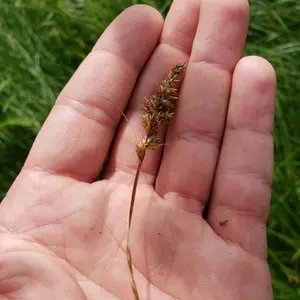
Clustered field sedge Carex praegracilis
2×1 ft · Sun–part shade · Evergreen
Premier no-mow lawn swap: mow short for turf or leave long for a meadow. Takes light foot traffic; wants regular water to stay green.
139 plants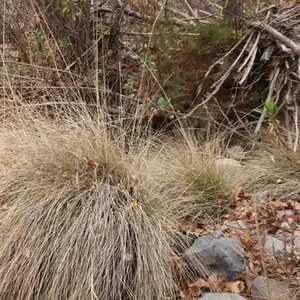
Deer grass Muhlenbergia rigens
4×3.5 ft · Full sun · Evergreen
Evergreen native clump with tall arching flower spikes for a strong accent. Keep it back from the house, out of the first 5 ft.
8 plants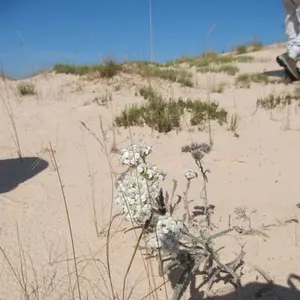
Common yarrow Achillea millefolium
2×1.5 ft · Full sun · Evergreen · Blooms late spring to summer
California native that knits into a soft, fern-leafy mat, staying low with white summer flower stalks. Tough and easygoing.
42 plants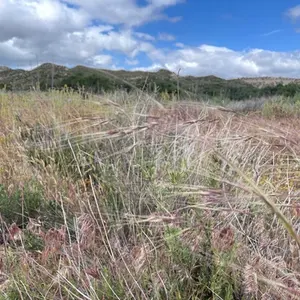
Purple needlegrass Stipa pulchra
2×3 ft · Sun–part shade
California's native state grass, great for erosion control and reseeds on its own. Keep it out of the first 5 ft by the house.
21 plants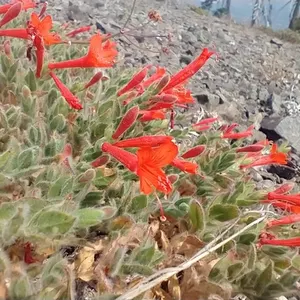
California fuchsia Epilobium canum
3.5×1.5 ft · Full sun · Blooms late summer to fall
Scarlet trumpet flowers late summer to fall make it a hummingbird favorite. Cut to the ground each winter for a fresh flush.
6 plants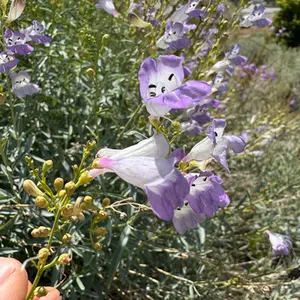
Foothill Penstemon 'Margarita BOP' Penstemon heterophyllus 'Margarita BOP'
2×1.5 ft · Full sun · Evergreen · Blooms spring to early summer
Electric blue-to-fuchsia tubular flowers pull in hummingbirds and native bees. The toughest, longest-lived foothill penstemon.
21 plants
Plant photos from iNaturalist contributors · CC BY / CC0. See the full plant guide →
🔥 Fire-smart placement: Deer grass, Purple needlegrass are drought-tolerant but more flammable — keep them out of the 0–5 ft strip against the house (Zone 0) and use the low-flammability plants there instead. Want a palette that's fire-safe right up to the wall? Try the look.
You're converting about 400 sq ft of lawn. Many Sacramento-area water providers pay a per-square-foot cash rebate for replacing lawn with low-water landscaping (often called Cash for Grass) — programs and rates change, so check your own provider's current offer and rules before you start.
Rebate programs usually want low-water plants covering a set share of the area and drip irrigation in place. This plan reaches roughly 100% live-plant coverage at maturity — GoGarden doesn't determine eligibility or amounts.
Want it installed?
Let a local pro know you're interested · no obligation
Plant counts use triangular on-center spacing and are planning estimates — buy a few extra for losses and confirm spacing with your nursery. Water use follows WUCOLS for the Central Valley; flammability guidance follows CAL FIRE / UC ANR; costs are 2026 retail assumptions, not quotes. Palette drawn for Sacramento (USDA zone 9b) — 48 plants and growing.
Who bills you for water in Oceanside — and who runs the rebate
Two agencies bill for water in Oceanside, and your rebate follows whichever one serves your address. Nearly the whole city — from the beach cottages of South Oceanside and the bluffs above the harbor to the inland tracts of Rancho Del Oro and Ocean Hills — is served by the City of Oceanside's own Water Utilities Department, the same office that reads your meter and mails your bill. The rural Morro Hills area on the city's northeast edge is the exception: those homes are served by the Rainbow Municipal Water District instead. Oceanside is unusual in how it gets its water, blending imported supply from the San Diego County Water Authority and desalinated seawater from the Carlsbad plant with groundwater from its own Mission Basin desalter along the San Luis Rey River — but for a lawn conversion, all that matters is the retail name on your bill, because that agency administers your rebate. Most Oceanside customers tap the regional SoCal WaterSmart turf-replacement rebate (socalwatersmart.com), funded through the Metropolitan Water District and coordinated locally by the San Diego County Water Authority's WaterSmart programs. The step that trips people up: you generally must reserve your rebate funds and get approval before you remove a single square foot of grass — these rebates are not retroactive, and funding can pause when it runs short. Confirm the current terms with whoever bills you before you dig.
Why replace your front lawn in Oceanside
Oceanside's marine layer is a beautiful liar. The "May Gray" and "June Gloom" that roll in off the Pacific keep a front lawn looking green through early summer with almost no effort — which hides how much water that same lawn drinks once the fog burns off. From the dry, sunny stretch of late summer into the offshore Santa Ana winds of September and October, and on through a rainless fall, a cool-season fescue or ryegrass lawn needs steady irrigation right when Oceanside's imported and desalinated water is most expensive to deliver. The gap widens as you move inland: homes in Rancho Del Oro, Ocean Hills, and Jeffries Ranch sit beyond the reliable reach of the coastal fog and run several degrees hotter than South O or Fire Mountain, so their lawns burn through even more water to stay green. Converting your front yard to low-water coastal plants ends the weekly mow, cuts that dry-season irrigation sharply, and — with drip and a few inches of mulch — gives you a yard that stays full and textured through October instead of going straw-brown the way a struggling lawn does by late summer. It reads as an upgrade on any Oceanside street, draws hummingbirds and native bees, and shrugs off the salt-laden coastal wind far better than turf ever will.
Coastal SoCal plants that thrive in Oceanside
Coastal Oceanside sits in a mild marine climate — roughly USDA zone 10a to 10b and Sunset zone 24 near the water, trending warmer toward Sunset 23 as you move inland to Morro Hills — which happens to suit one of the richest native plant palettes in California. Lean on San Diego County coastal natives: lemonade berry and laurel sumac are tough, salt-wind-tolerant evergreen shrubs that thrive on the bluffs above South Oceanside and the harbor; Cleveland sage and black sage carry fragrance and bloom on almost no summer water; San Diego sunflower (Bahiopsis laciniata), California buckwheat, and sticky monkeyflower add warm-season color; and toyon and ceanothus ('Concha' or 'Ray Hartman') give structure and feed birds. For a knit-together coastal groundcover, dwarf coyote brush (Baccharis 'Pigeon Point') fills in fast, while native deergrass restores the movement of a lawn without the thirst. A coast live oak — or a Torrey pine, the signature tree of this stretch of coast — anchors a larger yard. Mediterranean companions like lavender, rosemary, and westringia round things out in the hottest, most reflective spots. Group everything by water need so you're not irrigating a drought-tough sage on the same line as a thirstier accent, run it on drip rather than spray, and mulch three inches deep — which is also what the WaterSmart rebate requires. The free planner below lets you lay out beds and test this palette against your real lawn footprint.
Replacing a lawn in Oceanside — FAQs
Who is my water provider in Oceanside?
Nearly all of Oceanside is served by the City of Oceanside Water Utilities Department, the City's own retail utility, which blends imported San Diego County Water Authority water and Carlsbad desalinated seawater with groundwater from its Mission Basin desalter. The rural Morro Hills area on the northeast edge of the city is served instead by the Rainbow Municipal Water District. Check the name printed on your water bill — it determines which rebate program you can apply for.
Is there a rebate for replacing my lawn in Oceanside?
Yes. Most Oceanside customers can apply through the regional SoCal WaterSmart turf-replacement rebate (socalwatersmart.com), funded through the Metropolitan Water District and coordinated locally by the San Diego County Water Authority's WaterSmart programs; your retail agency administers it. We don't quote a dollar amount or per-square-foot rate here on purpose — rates, caps, and eligibility change, and funding can pause. Confirm the current terms directly with whoever bills you for water before you count on it.
Do I have to apply before removing my lawn?
Almost certainly, yes. These programs generally require you to reserve rebate funds and receive approval while the grass is still in place; they typically will not pay for work you've already started, because the rebate is not retroactive. There are usually a minimum turf area and rules on plant density, mulch depth, and replacing overhead spray sprinklers with drip or micro-irrigation. Apply, get the written go-ahead, then remove the lawn — and keep before-and-after photos.
What should I plant instead of grass in Oceanside?
Coastal San Diego natives and Mediterranean plants suited to a mild marine climate do best: lemonade berry, laurel sumac, Cleveland and black sage, San Diego sunflower, California buckwheat, toyon, ceanothus, and sticky monkeyflower, plus deergrass for movement and lavender, rosemary, or westringia in the hottest spots. A coast live oak or Torrey pine anchors a larger yard. Group plants by water need, use drip irrigation, and mulch well. The planner helps you pick a palette that fits your yard's sun, size, and exposure to coastal wind.
Does GoGarden install my new yard?
No — GoGarden is a free planning tool, not a landscaping contractor. We help you design the conversion, understand your local water provider and rebate landscape, and, if you'd like, connect with local pros who can handle the installation. We don't install anything, we don't pull your rebate paperwork, and using the planner costs nothing.
Areas we serve
Serving homeowners across Fire Mountain, South Oceanside (South O), Rancho Del Oro, Ocean Hills, Morro Hills, Jeffries Ranch, Townsite (Downtown Oceanside) and the greater Oceanside area.
Lawn conversion in nearby cities
aSaaSin Ventures LLC operates GoGarden — a free planning tool that can connect you with a local pro, not the installing contractor. Rebate programs, rates, and eligibility are set by your water provider and change often; confirm the current terms with them, and get any required written pre-approval, before removing turf. Plant and cost figures are planning estimates.