Poway, CA · Lawn conversion
Replace Your Poway Lawn With Low-Water Plants
Poway calls itself "The City in the Country," and its wide valley lots — from the horse properties of Old Coach to the ranch homes along Garden Road — often carry more lawn than the inland North County climate can comfortably water. Summers here run hot and rainless, winters bring frost to the valley floor, and a thirsty front lawn is one of the biggest draws on your water bill from May through October. Use the free planner below to sketch your lawn, swap it for low-water plants suited to San Diego's inland mesas, and get a realistic sense of the project before you talk to anyone. GoGarden is a free planning tool that can also connect you with local pros when you're ready — we don't do the installation ourselves.
Your water providerThe City of Poway runs its own retail water utility and bills residents directly — the name on your water bill is the City of Poway, not an outside district. The City buys nearly all of its supply wholesale from the San Diego County Water Authority (SDCWA), which in turn imports it through the Metropolitan Water District of Southern California (MWD) from the Colorado River and Northern California. Because Poway depends almost entirely on imported water, outdoor conservation carries real weight here. A few parcels near the city edge, or homes on private wells, may be served differently, so confirm the provider name printed on your latest bill.
Poway's own utility points residents to the regional turf-replacement rebate administered through SoCal Water$mart (socalwatersmart.com), funded by the Metropolitan Water District, alongside the San Diego County Water Authority's WaterSmart Turf Replacement program. Rates, funding, and eligibility rules change from year to year — and these programs can pause entirely when funding runs out, or move eligible customers to a waitlist — so confirm the current terms before you plan around any figure. One rule is consistent: you generally must apply and receive written approval, usually with a pre-inspection, before you remove any grass. Rebates are not retroactive, so starting early can disqualify the whole project. GoGarden is a free planning tool; we don't administer rebates or handle the paperwork.
1 Pick a look
A knee-high tapestry of native grasses and sedges threaded with seasonal flowers — the relaxed, walkable look that reads as a meadow, not a cactus garden.
2 How much lawn are you replacing?
Not sure of your square footage? Size it by shape
Measure the lawn you're removing. For an odd shape, add a couple of rectangles together.
3 Your plant plan
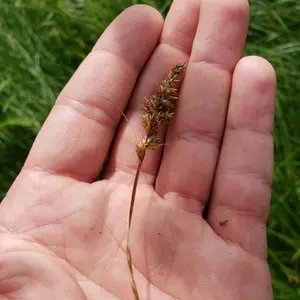
Clustered field sedge Carex praegracilis
2×1 ft · Sun–part shade · Evergreen
Premier no-mow lawn swap: mow short for turf or leave long for a meadow. Takes light foot traffic; wants regular water to stay green.
139 plants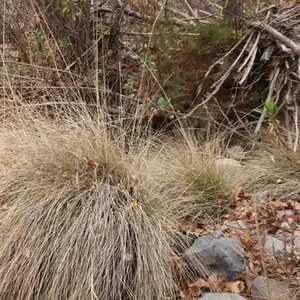
Deer grass Muhlenbergia rigens
4×3.5 ft · Full sun · Evergreen
Evergreen native clump with tall arching flower spikes for a strong accent. Keep it back from the house, out of the first 5 ft.
8 plants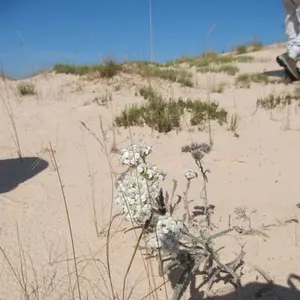
Common yarrow Achillea millefolium
2×1.5 ft · Full sun · Evergreen · Blooms late spring to summer
California native that knits into a soft, fern-leafy mat, staying low with white summer flower stalks. Tough and easygoing.
42 plants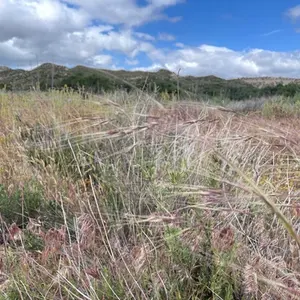
Purple needlegrass Stipa pulchra
2×3 ft · Sun–part shade
California's native state grass, great for erosion control and reseeds on its own. Keep it out of the first 5 ft by the house.
21 plants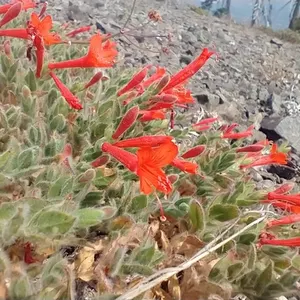
California fuchsia Epilobium canum
3.5×1.5 ft · Full sun · Blooms late summer to fall
Scarlet trumpet flowers late summer to fall make it a hummingbird favorite. Cut to the ground each winter for a fresh flush.
6 plants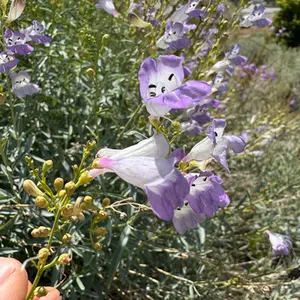
Foothill Penstemon 'Margarita BOP' Penstemon heterophyllus 'Margarita BOP'
2×1.5 ft · Full sun · Evergreen · Blooms spring to early summer
Electric blue-to-fuchsia tubular flowers pull in hummingbirds and native bees. The toughest, longest-lived foothill penstemon.
21 plants
Plant photos from iNaturalist contributors · CC BY / CC0. See the full plant guide →
🔥 Fire-smart placement: Deer grass, Purple needlegrass are drought-tolerant but more flammable — keep them out of the 0–5 ft strip against the house (Zone 0) and use the low-flammability plants there instead. Want a palette that's fire-safe right up to the wall? Try the look.
You're converting about 400 sq ft of lawn. Many Sacramento-area water providers pay a per-square-foot cash rebate for replacing lawn with low-water landscaping (often called Cash for Grass) — programs and rates change, so check your own provider's current offer and rules before you start.
Rebate programs usually want low-water plants covering a set share of the area and drip irrigation in place. This plan reaches roughly 100% live-plant coverage at maturity — GoGarden doesn't determine eligibility or amounts.
Want it installed?
Let a local pro know you're interested · no obligation
Plant counts use triangular on-center spacing and are planning estimates — buy a few extra for losses and confirm spacing with your nursery. Water use follows WUCOLS for the Central Valley; flammability guidance follows CAL FIRE / UC ANR; costs are 2026 retail assumptions, not quotes. Palette drawn for Sacramento (USDA zone 9b) — 48 plants and growing.
Why lawn struggles in Poway's inland valley
Poway sits inland in a chain of valleys about 500 feet up, well east of the coastal marine layer that keeps beach towns mild. That means hotter, drier summers and colder winter nights than La Jolla or Encinitas — roughly USDA zone 9b to 10a, Sunset zones 18 to 21, with real frost settling into low spots along Poway Creek on clear January mornings. Add the Santa Ana winds that rake North County each fall, and a cool-season lawn spends much of the year fighting the climate. The ground works against turf, too: Poway yards typically sit on decomposed granite in the upper soil with expansive clay beneath, and hillside parcels in Bridlewood or Old Coach hit weathered bedrock not far down. That fast-draining granite sheds water on the slopes while the clay below pools it, so a lawn needs frequent irrigation just to hold color through the July and August heat — and still tends to scorch on the high, sunny crown of the yard while low spots stay soggy. The plants that genuinely thrive here are the deep-rooted natives and Mediterranean shrubs adapted to exactly this heat, this drainage, and this long dry summer.
Your water provider, the rebate, and fire-wise design
Before you plan a conversion, confirm who bills you — for nearly all of Poway that's the City's own water utility, which administers your account and points you to the regional turf rebate run through SoCal Water$mart and the San Diego County Water Authority's WaterSmart program. We deliberately don't quote per-square-foot rates here, because the numbers, caps, and rules shift year to year and the programs can pause when funding is exhausted; the only reliable figures come from your provider. What rarely changes is the sequence: apply first, get written approval and usually a pre-inspection of your existing lawn, then do the work and document it — remove grass early and you can forfeit a rebate you'd otherwise have earned. There's a second reason a smart conversion matters in Poway specifically: much of the city sits in a Very High Fire Hazard Severity Zone, as the 2007 Witch Creek fire made painfully clear. A thoughtfully designed low-water yard — well-spaced plantings, gravel or decomposed-granite paths, and irrigated, low-fuel beds near the house — can support the defensible space the Poway Fire Department expects, where neglected turf and overgrown brush do the opposite. Plant choice and spacing both matter for fire safety, so check current defensible-space guidance with Poway Fire before you finalize a design.
A water-wise plan for Poway yards
The palette that suits Poway leans on San Diego's inland natives, backed by tough Mediterranean companions. For structure and spring color, reach for ceanothus ('Concha' or 'Ray Hartman'), manzanita, toyon, lemonade berry, and laurel sumac — all chaparral plants at home on Poway's granite hillsides. Cleveland sage and black sage bring fragrance and pollinators; San Diego sunflower (Bahiopsis laciniata), sticky monkeyflower, and California buckwheat carry warm-season bloom on almost no water; and native deergrass and other bunchgrasses restore the movement of a lawn without the thirst. Lavender, rosemary, and westringia handle the hottest, most reflective spots against west-facing walls. If your lot carries a mature Engelmann or coast live oak — the signature oaks of Poway's inland mesas — design the ground beneath the canopy as a dry, un-irrigated zone; summer water against a native oak's trunk is one of the fastest ways to rot its roots. Group everything by water need so you never run a drought-tough manzanita on the same drip line as a thirstier accent, mulch beds two to three inches deep to hold moisture in that fast-draining soil, and plant in the cool, wet months — late fall through early spring — so roots establish before Poway's first real heat. GoGarden's free planner lets you lay out beds, choose from this palette, and estimate mulch and plant counts before you lift a shovel.
Replacing a lawn in Poway — FAQs
Who is my water provider in Poway?
For nearly all of Poway, the retail water provider is the City of Poway's own municipal water utility — your bill comes from the City, which also administers your account. The City buys that water wholesale from the San Diego County Water Authority, which imports it through the Metropolitan Water District from the Colorado River and Northern California. A few parcels near the city edge or on private wells may differ, so confirm the utility name printed on your latest water bill.
Is there a turf or lawn rebate for Poway homeowners?
Yes — Poway participates in the regional turf-replacement rebate administered through SoCal Water$mart (socalwatersmart.com), funded by the Metropolitan Water District, along with the San Diego County Water Authority's WaterSmart Turf Replacement program. Terms, funding, and eligibility change from year to year, and these programs can pause or move applicants to a waitlist when funding runs out, so we don't list dollar amounts — confirm the current rate and rules with your provider before planning around any figure.
Do I need approval before I remove my lawn?
Almost always, yes. These rebate programs generally require you to apply and receive written approval — usually after a pre-inspection of your existing lawn — before you remove any grass. Rebates are not retroactive: tear the lawn out first and you can forfeit the money even if the finished project would have qualified. Apply, wait for the go-ahead, then start, and keep before-and-after photos and receipts.
What should I plant instead of grass in Poway?
Poway's hot inland climate and decomposed-granite soil suit San Diego natives like ceanothus, manzanita, toyon, lemonade berry, laurel sumac, Cleveland and black sage, San Diego sunflower, California buckwheat, and sticky monkeyflower, plus native deergrass and Mediterranean staples such as lavender, rosemary, and westringia. Group them by water need, irrigate with drip, and mulch deeply. If you have a native Engelmann or coast live oak, keep the ground beneath it dry and unirrigated — summer water near the trunk can rot the roots.
Does GoGarden install my new yard or handle the rebate?
No. GoGarden is a free planning tool, not the installing contractor. We help you design the conversion, estimate the area and materials, and understand your local water and rebate landscape, then connect you with independent local pros when you're ready to build. We don't handle your rebate application or paperwork — that's between you and your water provider.
Areas we serve
Serving homeowners across Green Valley, Old Coach, Bridlewood, Garden Road, Twin Peaks, Stone Canyon, The Heritage and the greater Poway area.
Lawn conversion in nearby cities
aSaaSin Ventures LLC operates GoGarden — a free planning tool that can connect you with a local pro, not the installing contractor. Rebate programs, rates, and eligibility are set by your water provider and change often; confirm the current terms with them, and get any required written pre-approval, before removing turf. Plant and cost figures are planning estimates.