Fair Oaks, CA · Lawn conversion
Replace Your Fair Oaks Lawn With a Low-Water Yard
Fair Oaks is known for its mature oaks, big established lots, and the American River bluffs above town — and in our USDA zone 9b summers, a thirsty front lawn is one of the hungriest things on the property, needing the most water right when the valley is hottest and driest. Replacing turf with low-water, oak-friendly plants cuts that summer irrigation, ends the weekly mow, and protects the heritage trees that give Fair Oaks its character. Use the free planner below to map your yard, test plant layouts, and get a realistic picture of the project before you spend a dollar. GoGarden is a free planning tool that can also connect you with local pros when you're ready — we don't sell or install anything ourselves.
Your water providerFair Oaks Water District serves most of Fair Oaks — buying roughly 90% of its supply as treated American River and Folsom Lake surface water wholesale from the San Juan Water District, plus local groundwater from its own wells. Homes toward the Citrus Heights and Orangevale edges of town may be served instead by the Citrus Heights Water District or the Orange Vale Water Company. The boundaries don't line up neatly with the 95628 ZIP code, so check the name printed on your water bill to confirm which agency serves your address.
Be careful with rebate claims for Fair Oaks: the Fair Oaks Water District's own current rebate list is built around indoor fixtures — high-efficiency toilets and clothes washers — rather than a headline turf payment, so a dedicated lawn-conversion rebate is not something we can promise here. The District is a member of the Regional Water Authority, which coordinates the regional water-efficiency platform at bewatersmart.info that many area agencies use, so it's worth checking there. Because these programs open, close, and change with funding, confirm what landscape incentive (if any) is currently offered directly with your provider — Fair Oaks Water District, Citrus Heights Water District, or Orange Vale Water Company — and get written pre-approval, often after a pre-inspection, before you remove any grass. Turf rebates are almost never retroactive.
1 Pick a look
A knee-high tapestry of native grasses and sedges threaded with seasonal flowers — the relaxed, walkable look that reads as a meadow, not a cactus garden.
2 How much lawn are you replacing?
Not sure of your square footage? Size it by shape
Measure the lawn you're removing. For an odd shape, add a couple of rectangles together.
3 Your plant plan
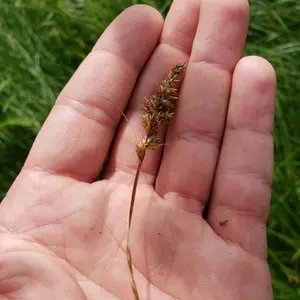
Clustered field sedge Carex praegracilis
2×1 ft · Sun–part shade · Evergreen
Premier no-mow lawn swap: mow short for turf or leave long for a meadow. Takes light foot traffic; wants regular water to stay green.
139 plants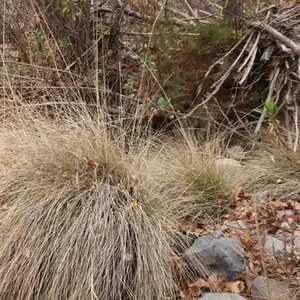
Deer grass Muhlenbergia rigens
4×3.5 ft · Full sun · Evergreen
Evergreen native clump with tall arching flower spikes for a strong accent. Keep it back from the house, out of the first 5 ft.
8 plants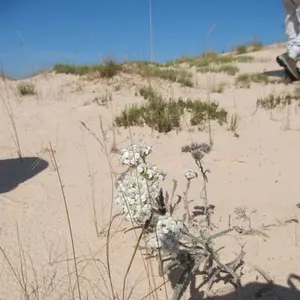
Common yarrow Achillea millefolium
2×1.5 ft · Full sun · Evergreen · Blooms late spring to summer
California native that knits into a soft, fern-leafy mat, staying low with white summer flower stalks. Tough and easygoing.
42 plants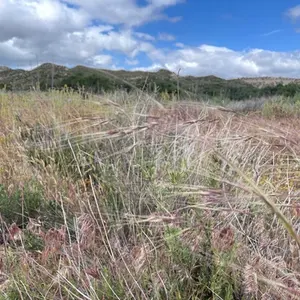
Purple needlegrass Stipa pulchra
2×3 ft · Sun–part shade
California's native state grass, great for erosion control and reseeds on its own. Keep it out of the first 5 ft by the house.
21 plants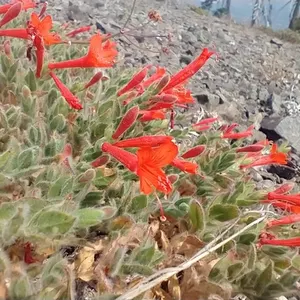
California fuchsia Epilobium canum
3.5×1.5 ft · Full sun · Blooms late summer to fall
Scarlet trumpet flowers late summer to fall make it a hummingbird favorite. Cut to the ground each winter for a fresh flush.
6 plants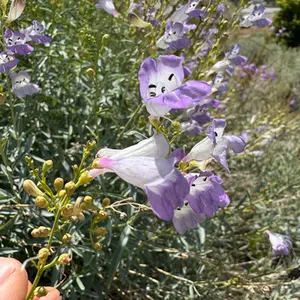
Foothill Penstemon 'Margarita BOP' Penstemon heterophyllus 'Margarita BOP'
2×1.5 ft · Full sun · Evergreen · Blooms spring to early summer
Electric blue-to-fuchsia tubular flowers pull in hummingbirds and native bees. The toughest, longest-lived foothill penstemon.
21 plants
Plant photos from iNaturalist contributors · CC BY / CC0. See the full plant guide →
🔥 Fire-smart placement: Deer grass, Purple needlegrass are drought-tolerant but more flammable — keep them out of the 0–5 ft strip against the house (Zone 0) and use the low-flammability plants there instead. Want a palette that's fire-safe right up to the wall? Try the look.
You're converting about 400 sq ft of lawn. Many Sacramento-area water providers pay a per-square-foot cash rebate for replacing lawn with low-water landscaping (often called Cash for Grass) — programs and rates change, so check your own provider's current offer and rules before you start.
Rebate programs usually want low-water plants covering a set share of the area and drip irrigation in place. This plan reaches roughly 100% live-plant coverage at maturity — GoGarden doesn't determine eligibility or amounts.
Want it installed?
Let a local pro know you're interested · no obligation
Plant counts use triangular on-center spacing and are planning estimates — buy a few extra for losses and confirm spacing with your nursery. Water use follows WUCOLS for the Central Valley; flammability guidance follows CAL FIRE / UC ANR; costs are 2026 retail assumptions, not quotes. Palette drawn for Sacramento (USDA zone 9b) — 48 plants and growing.
Who bills you for water in Fair Oaks — and how to check for a rebate
Fair Oaks is unincorporated Sacramento County, and its water comes from more than one agency, so the first step is to read the name on your bill. Most of town is served by the Fair Oaks Water District, which buys roughly 90% of its supply as treated American River and Folsom Lake surface water wholesale from the San Juan Water District and pumps the rest from local groundwater wells. Homes toward the Citrus Heights and Orangevale edges, though, may be served instead by the Citrus Heights Water District or the Orange Vale Water Company — the boundaries don't follow the 95628 ZIP neatly, so confirm your provider before you plan around any incentive. On rebates, be careful with what you read online: the Fair Oaks Water District's own current rebate list is built around indoor fixtures — high-efficiency toilets and clothes washers — rather than a headline turf payment, and a dedicated lawn-conversion rebate isn't something we can promise for Fair Oaks. The District is a Regional Water Authority member, and the RWA runs the regional bewatersmart.info platform many area agencies use, so it's worth checking there and calling your provider directly for whatever landscape incentive may be open when you apply. Whatever you find, get written pre-approval before you remove a single blade — turf rebates are almost never retroactive.
Why convert your Fair Oaks lawn — and mind the oaks
Fair Oaks earned its name from the mature oaks that still shade its older neighborhoods — interior live oak and valley oak canopies over the big lots of Rollingwood, Winding Way Village, and the streets above the Fair Oaks Bluffs. Those oaks are the strongest argument for getting off turf. A cool-season lawn in our USDA zone 9b climate needs frequent summer irrigation to stay green through 100-degree stretches, and native oaks hate exactly that: regular summer water pooled near the trunk and root crown is a leading cause of oak decline and root-rot fungus. Pull the thirsty lawn out from under and around a heritage oak, replace it with dry-shade plants that want no summer water, and you protect a tree worth far more than the grass. Away from the oaks, the case is the usual Sacramento Valley one — outdoor watering is the biggest swing on a summer bill, and a low-water front yard ends the weekly mow, holds its color through a July heat wave, and reads as an upgrade rather than a chore in a Fair Oaks Village or Curragh Downs frontage. On the sloped bluff-side lots, well-mulched beds and permeable paths also hold soil and soak in winter rain far better than a strip of struggling fescue. Use the planner below to map your yard before you commit to anything.
What grows well in Fair Oaks
Fair Oaks sits in USDA zone 9b — hot, dry summers and mild, wet winters — with the added wrinkle of real oak shade across much of town, so think in two zones. In full sun, California natives and Mediterranean plants carry the design: manzanita, ceanothus (California lilac), toyon, western redbud, and coffeeberry for structure; Cleveland and autumn sage, California fuchsia, buckwheat, yarrow, lavender, and rosemary for heat-proof color; and deergrass or other native bunchgrasses for movement without a mower. Under and around the native oaks — where summer water is off the table — lean on the dry-shade natives that evolved beneath them: coffeeberry, snowberry, Ribes (currant and gooseberry), Douglas iris, heuchera (coral bells), and native sedges like Carex pansa, all of which sip winter rain and coast through the dry months. Whatever the exposure, the recipe is the same: group plants by how much water they want so you never overwater the tough ones to keep a thirstier one alive, run everything on drip rather than spray, and top the soil with three to four inches of mulch to hold moisture and suppress weeds. Plant in fall or early winter so roots establish on the cool-season rains before Fair Oaks' first real heat. The planner below lets you test these swaps against your actual lawn footprint and see roughly how much turf you'd be replacing.
Replacing a lawn in Fair Oaks — FAQs
Who is my water provider in Fair Oaks?
Most Fair Oaks homes are served by the Fair Oaks Water District, which delivers treated American River and Folsom Lake water bought wholesale from the San Juan Water District plus local groundwater. Homes toward the Citrus Heights or Orangevale edges of town may instead be served by the Citrus Heights Water District or the Orange Vale Water Company. The boundaries don't line up neatly with the 95628 ZIP code, so check the name printed on your water bill — it determines which rebate program, if any, you can use.
Is there a lawn or turf rebate in Fair Oaks?
Maybe, but don't assume one. The Fair Oaks Water District's own current rebate list is built around indoor fixtures like high-efficiency toilets and clothes washers rather than a dedicated turf payment. The District is a Regional Water Authority member and appears on the regional bewatersmart.info platform, so check there and call your provider directly for any landscape or turf incentive that's open when you apply. We don't quote dollar amounts here because these programs change and can pause without notice.
Do I need approval before removing my lawn?
If you're applying for any turf or landscape rebate, almost certainly yes. These programs generally require you to apply and receive written approval — often after a pre-inspection — before you remove any grass, and they are rarely retroactive. Tear the lawn out first and you can disqualify yourself. Confirm the current steps with your specific provider (Fair Oaks Water District, Citrus Heights Water District, or Orange Vale Water Company) before the first shovel goes in.
I have big native oaks over my lawn — can I still convert it?
Yes, and it's often the best thing you can do for the trees. The valley and interior live oaks common in Fair Oaks are adapted to dry summers and can decline when a lawn keeps their root zone wet in the heat. Replace the turf under and around them with dry-shade natives that need no summer water — coffeeberry, snowberry, currant, Douglas iris, coral bells, and native sedges — and keep irrigation and heavy digging away from the trunk and root crown. The planner can help you lay out an oak-friendly bed.
Does GoGarden install my new yard?
No — GoGarden is a free planning tool, not a landscaping contractor. We help you design the conversion, estimate the turf area, and understand your local water and rebate landscape, then can connect you with independent local pros when you're ready to build. We don't install anything ourselves, we don't handle rebate paperwork, and using the planner costs nothing.
Areas we serve
Serving homeowners across Fair Oaks Village (Old Fair Oaks), Rollingwood, Winding Way Village, Curragh Downs, Phoenix Field / Phoenix Ridge, Northridge, Fair Oaks Bluffs and the greater Fair Oaks area.
Lawn conversion in nearby cities
aSaaSin Ventures LLC operates GoGarden — a free planning tool that can connect you with a local pro, not the installing contractor. Rebate programs, rates, and eligibility are set by your water provider and change often; confirm the current terms with them, and get any required written pre-approval, before removing turf. Plant and cost figures are planning estimates.