Granite Bay, CA · Lawn conversion
Replace Your Granite Bay Lawn With a Low-Water Yard
Granite Bay sits where the Sacramento Valley rises into Placer County's oak foothills — big lots, granite outcrops, and USDA zone 9b summers that run hot and dry for months. Replacing a thirsty front lawn with low-water plants cuts your biggest seasonal water use, ends the weekend mow on an acre-sized yard, and can qualify you for the San Juan Water District's turf rebate. Use the free planner below to sketch your yard, try a plant layout, and see a realistic design before you spend a dollar. GoGarden is a planning tool that can connect you with local pros — we don't sell or install anything.
Your water providerSan Juan Water District (its retail division serves virtually all of Granite Bay and draws 100% of its supply from Folsom Lake; a few properties near the western edge by Roseville may instead be City of Roseville customers — check the name on your water bill to confirm)
The San Juan Water District runs its own Turf Replacement Rebate, paid as a credit on your water bill, for customers who replace irrigated lawn with low-water landscaping. A required first step is submitting an application and scheduling a pre-inspection with the district's Water Efficiency team before you remove any grass — start the work first and the project can be disqualified, because the rebate isn't retroactive. Artificial turf does not qualify, funding is limited and first-come, first-served, and terms change, so confirm the current program directly with San Juan Water District before you begin. We don't quote dollar figures here because they can change.
1 Pick a look
A knee-high tapestry of native grasses and sedges threaded with seasonal flowers — the relaxed, walkable look that reads as a meadow, not a cactus garden.
2 How much lawn are you replacing?
Not sure of your square footage? Size it by shape
Measure the lawn you're removing. For an odd shape, add a couple of rectangles together.
3 Your plant plan
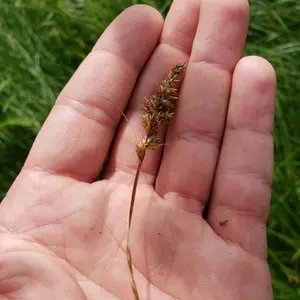
Clustered field sedge Carex praegracilis
2×1 ft · Sun–part shade · Evergreen
Premier no-mow lawn swap: mow short for turf or leave long for a meadow. Takes light foot traffic; wants regular water to stay green.
139 plants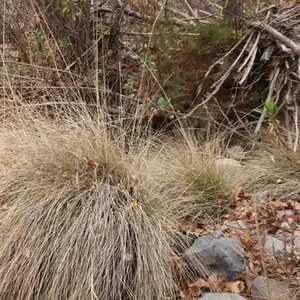
Deer grass Muhlenbergia rigens
4×3.5 ft · Full sun · Evergreen
Evergreen native clump with tall arching flower spikes for a strong accent. Keep it back from the house, out of the first 5 ft.
8 plants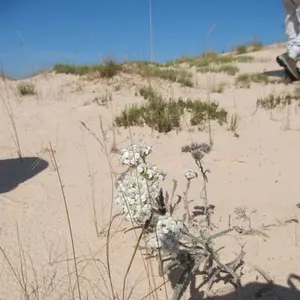
Common yarrow Achillea millefolium
2×1.5 ft · Full sun · Evergreen · Blooms late spring to summer
California native that knits into a soft, fern-leafy mat, staying low with white summer flower stalks. Tough and easygoing.
42 plants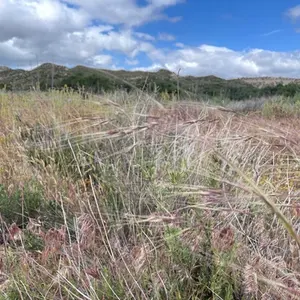
Purple needlegrass Stipa pulchra
2×3 ft · Sun–part shade
California's native state grass, great for erosion control and reseeds on its own. Keep it out of the first 5 ft by the house.
21 plants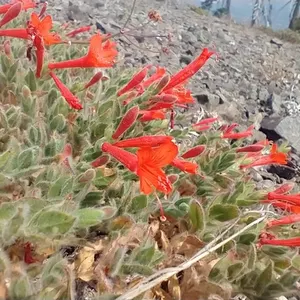
California fuchsia Epilobium canum
3.5×1.5 ft · Full sun · Blooms late summer to fall
Scarlet trumpet flowers late summer to fall make it a hummingbird favorite. Cut to the ground each winter for a fresh flush.
6 plants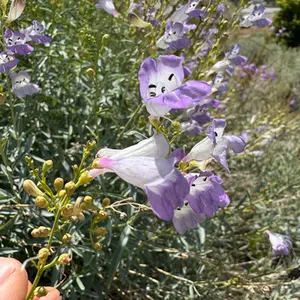
Foothill Penstemon 'Margarita BOP' Penstemon heterophyllus 'Margarita BOP'
2×1.5 ft · Full sun · Evergreen · Blooms spring to early summer
Electric blue-to-fuchsia tubular flowers pull in hummingbirds and native bees. The toughest, longest-lived foothill penstemon.
21 plants
Plant photos from iNaturalist contributors · CC BY / CC0. See the full plant guide →
🔥 Fire-smart placement: Deer grass, Purple needlegrass are drought-tolerant but more flammable — keep them out of the 0–5 ft strip against the house (Zone 0) and use the low-flammability plants there instead. Want a palette that's fire-safe right up to the wall? Try the look.
You're converting about 400 sq ft of lawn. Many Sacramento-area water providers pay a per-square-foot cash rebate for replacing lawn with low-water landscaping (often called Cash for Grass) — programs and rates change, so check your own provider's current offer and rules before you start.
Rebate programs usually want low-water plants covering a set share of the area and drip irrigation in place. This plan reaches roughly 100% live-plant coverage at maturity — GoGarden doesn't determine eligibility or amounts.
Want it installed?
Let a local pro know you're interested · no obligation
Plant counts use triangular on-center spacing and are planning estimates — buy a few extra for losses and confirm spacing with your nursery. Water use follows WUCOLS for the Central Valley; flammability guidance follows CAL FIRE / UC ANR; costs are 2026 retail assumptions, not quotes. Palette drawn for Sacramento (USDA zone 9b) — 48 plants and growing.
Your Granite Bay water provider and its turf rebate
Nearly every home in Granite Bay is served by the San Juan Water District, whose retail division covers this corner of southern Placer County and draws all of its supply from nearby Folsom Lake. Because San Juan is your water utility, it's also the agency that runs the rebate: the district offers its own Turf Replacement Rebate, paid as a credit on your water bill, for customers who swap irrigated lawn for low-water landscaping. The step people miss is the pre-inspection — you generally submit an application and then schedule a visit with San Juan's Water Efficiency team before you pull out a single blade of grass. Tear out the lawn first and the project can be disqualified, because these rebates aren't retroactive. Two more things worth knowing: artificial turf does not qualify as a replacement, and funding is limited and first-come, first-served, so the program can close for a season once it's committed. San Juan is also a member of the region's Regional Water Authority (the bewatersmart.info umbrella), but for terms that actually apply to your address, go straight to the district. And if your home sits right on the western edge near Roseville, confirm the utility name on your bill — a few properties there fall under the City of Roseville instead, with a different rebate.
Why convert a lawn in Granite Bay's oak country
Granite Bay isn't the valley floor — it sits where the Sacramento Valley climbs into Placer County's blue-oak foothills, on rolling ground of decomposed granite, clay, and the granite outcrops the community is named for. Most parcels are large, an acre or more, which means a front lawn here is often a genuinely big irrigated area, and outdoor watering is the largest, most seasonal swing on the bill. Our zone 9b summers run hot and bone-dry for months, so holding cool-season turf green from June into October is the heaviest watering of the year exactly when Folsom Lake is lowest. There's a second reason unique to Granite Bay's oak canopy: native oaks are adapted to a dry summer, and a well-watered lawn running right up to the trunk is one of the surest ways to rot a mature blue or valley oak's crown over time. Pulling the turf out from under and around your oaks — and going to summer-dry planting instead — protects the very trees that make these neighborhoods worth living in. Add in the fire angle (much of Granite Bay falls in a State Responsibility Area, where a mown-then-crispy lawn near the house does nothing for defensible space) and less weekend mowing on an acre lot, and a water-wise conversion simply fits the place.
Low-water plants for Granite Bay's foothill yards
Granite Bay's foothill setting suits a plant palette built around California natives that already grow in the surrounding oak woodland. Western redbud, toyon, coffeeberry, and manzanita give you evergreen structure and seasonal color; ceanothus (California lilac) brings a wash of spring blue that pollinators swarm. For lower, sunnier drifts, lean on California fuchsia, buckwheat, and salvias like Cleveland and autumn sage, with deergrass and other native bunchgrasses for movement without a mower. Mediterranean companions — lavender, rosemary, rockrose, and germander — shrug off the heat once established and pair well with the region's rocky, fast-draining ground. The move specific to Granite Bay is respecting your oaks: keep thirsty plants and any summer drip out beyond the canopy dripline, and under the tree choose summer-dry natives that want no irrigation once rooted, so you don't force water onto oak roots that resent it. Group everything else by water need, put it on drip rather than spray, and top the beds with a few inches of mulch to hold the winter rain deep into summer. Decomposed-granite paths and the granite outcrops many lots already have make natural, no-water features to design around. The free planner below lets you sketch your beds, try a palette, and see a realistic layout before you spend anything.
Replacing a lawn in Granite Bay — FAQs
Who provides my water in Granite Bay?
Nearly all Granite Bay homes are served by the San Juan Water District, whose retail division covers this part of southern Placer County and gets 100% of its supply from Folsom Lake. A few properties near the western edge by Roseville may instead be City of Roseville customers, so check the utility name printed on your water bill to be sure.
Is there a lawn rebate in Granite Bay?
Yes — the San Juan Water District runs its own Turf Replacement Rebate, paid as a credit on your water bill, for customers who replace irrigated lawn with low-water landscaping. We don't quote a dollar amount here on purpose: rates, caps, and funding change, and the program is first-come, first-served. Confirm the current terms directly with the district before you plan around it.
Do I need approval before I remove my lawn?
For San Juan's rebate, yes. You generally submit an application and then schedule a pre-inspection with the district's Water Efficiency team before removing any grass — start the work first and the project can be disqualified, because the rebate isn't retroactive. Contact San Juan Water District to confirm the current steps before you dig anything up.
Can I keep my oak trees when I convert the lawn?
Yes — and it usually helps them. Granite Bay's native blue and valley oaks are adapted to dry summers, and a lawn watered right up to the trunk can rot a mature oak's crown over the years. Removing the turf and switching to summer-dry plants beyond the dripline protects the tree. Keep in mind Placer County's oak-protection rules can apply, so check before removing or heavily disturbing a native oak.
What should I plant instead of grass in Granite Bay?
Low-water plants suited to zone 9b foothill yards: California natives like western redbud, toyon, manzanita, ceanothus, coffeeberry, and salvias, plus California fuchsia and buckwheat for color and deergrass for texture. Mediterranean plants such as lavender and rosemary do well in the rocky, fast-draining soil. Group by water need, mulch heavily, and irrigate with drip. The planner helps you lay out beds and pick a palette that fits your yard.
Areas we serve
Serving homeowners across Los Lagos, Treelake Village, Wexford, Clos du Lac, Hidden Lakes, Granite Bay Hills, Eureka Grove and the greater Granite Bay area.
Lawn conversion in nearby cities
aSaaSin Ventures LLC operates GoGarden — a free planning tool that can connect you with a local pro, not the installing contractor. Rebate programs, rates, and eligibility are set by your water provider and change often; confirm the current terms with them, and get any required written pre-approval, before removing turf. Plant and cost figures are planning estimates.