West Sacramento, CA · Lawn conversion
Replace Your West Sacramento Lawn With a Low-Water Yard
West Sacramento sits on the flat valley floor between the Sacramento River and the Yolo Bypass, where zone 9b summers run long, hot, and dry and a thirsty front lawn is often the single biggest water user on the property. Use the free planner below to sketch your yard, swap turf for low-water plants suited to the delta-valley climate and its heavy clay soils, and see a realistic layout before you spend a dollar. GoGarden is a planning tool that can also connect you with local pros — we don't sell or install anything ourselves.
Your water providerCity of West Sacramento (the City runs its own municipal water utility through its Public Works Department, treating Sacramento River water at the Bryte Bend Water Treatment Plant and serving essentially every home in the city, then billing you directly. West Sacramento is in Yolo County, so it is not served by a Sacramento County or City of Sacramento water agency — check the provider name printed on your bill to confirm.)
West Sacramento runs its own conservation incentives rather than the per-square-foot turf rebates you'll see in some nearby cities: a Lawn Replacement Rebate delivered as a voucher toward compost and mulch for your new landscape, a rebate toward a WaterSense-labeled smart irrigation controller, and a free outdoor water-use survey. Because it's structured differently, don't assume the rules match another city's program — incentives like these are generally not retroactive and can be capped by funding, so sign up and confirm the current terms directly with the City of West Sacramento's water-conservation program before you remove any grass.
1 Pick a look
A knee-high tapestry of native grasses and sedges threaded with seasonal flowers — the relaxed, walkable look that reads as a meadow, not a cactus garden.
2 How much lawn are you replacing?
Not sure of your square footage? Size it by shape
Measure the lawn you're removing. For an odd shape, add a couple of rectangles together.
3 Your plant plan
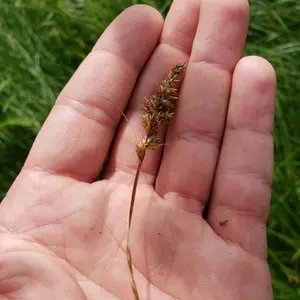
Clustered field sedge Carex praegracilis
2×1 ft · Sun–part shade · Evergreen
Premier no-mow lawn swap: mow short for turf or leave long for a meadow. Takes light foot traffic; wants regular water to stay green.
139 plants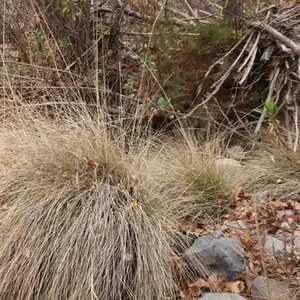
Deer grass Muhlenbergia rigens
4×3.5 ft · Full sun · Evergreen
Evergreen native clump with tall arching flower spikes for a strong accent. Keep it back from the house, out of the first 5 ft.
8 plants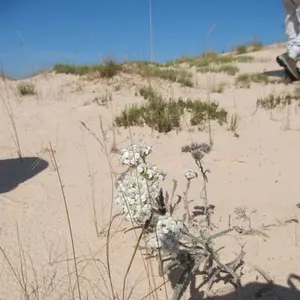
Common yarrow Achillea millefolium
2×1.5 ft · Full sun · Evergreen · Blooms late spring to summer
California native that knits into a soft, fern-leafy mat, staying low with white summer flower stalks. Tough and easygoing.
42 plants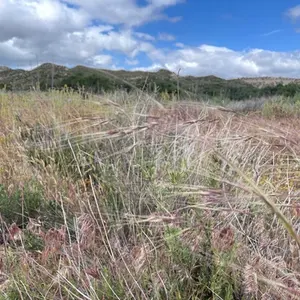
Purple needlegrass Stipa pulchra
2×3 ft · Sun–part shade
California's native state grass, great for erosion control and reseeds on its own. Keep it out of the first 5 ft by the house.
21 plants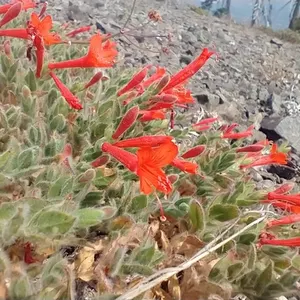
California fuchsia Epilobium canum
3.5×1.5 ft · Full sun · Blooms late summer to fall
Scarlet trumpet flowers late summer to fall make it a hummingbird favorite. Cut to the ground each winter for a fresh flush.
6 plants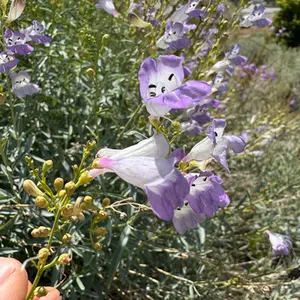
Foothill Penstemon 'Margarita BOP' Penstemon heterophyllus 'Margarita BOP'
2×1.5 ft · Full sun · Evergreen · Blooms spring to early summer
Electric blue-to-fuchsia tubular flowers pull in hummingbirds and native bees. The toughest, longest-lived foothill penstemon.
21 plants
Plant photos from iNaturalist contributors · CC BY / CC0. See the full plant guide →
🔥 Fire-smart placement: Deer grass, Purple needlegrass are drought-tolerant but more flammable — keep them out of the 0–5 ft strip against the house (Zone 0) and use the low-flammability plants there instead. Want a palette that's fire-safe right up to the wall? Try the look.
You're converting about 400 sq ft of lawn. Many Sacramento-area water providers pay a per-square-foot cash rebate for replacing lawn with low-water landscaping (often called Cash for Grass) — programs and rates change, so check your own provider's current offer and rules before you start.
Rebate programs usually want low-water plants covering a set share of the area and drip irrigation in place. This plan reaches roughly 100% live-plant coverage at maturity — GoGarden doesn't determine eligibility or amounts.
Want it installed?
Let a local pro know you're interested · no obligation
Plant counts use triangular on-center spacing and are planning estimates — buy a few extra for losses and confirm spacing with your nursery. Water use follows WUCOLS for the Central Valley; flammability guidance follows CAL FIRE / UC ANR; costs are 2026 retail assumptions, not quotes. Palette drawn for Sacramento (USDA zone 9b) — 48 plants and growing.
Your water provider and West Sacramento's own rebate
West Sacramento is unusual for the region in that the City runs its own water system. The City's Public Works Department pulls water from the Sacramento River, treats it at the Bryte Bend Water Treatment Plant, and bills you directly — there's no separate wholesaler in the middle. That matters for a lawn conversion, because your rebate program is a City program, not a Sacramento-agency one. Here's the part that trips people up: West Sacramento sits in Yolo County, on the west bank of the river, so the well-known Sacramento County 'Cash for Grass' rebate does not apply to your address, and neither do the City of Sacramento's programs across the bridge. West Sacramento instead offers its own incentives — a Lawn Replacement Rebate that comes as a voucher toward delivered compost and mulch for your new landscape, a rebate toward a WaterSense-labeled smart irrigation controller, and a free outdoor water-use survey. Because it's structured differently from a per-square-foot turf rebate, don't assume the rules match what you've read for other cities: sign up and confirm the current terms with the City's water-conservation program before you tear anything out, since incentives like these are generally not retroactive and can be limited by funding. Check the name on your bill to be sure you're a City of West Sacramento water customer, then start at the City's water-programs page.
Why convert your front lawn in West Sacramento
West Sacramento sits on the flat valley floor between the Sacramento River and the Yolo Bypass, in USDA zone 9b — long, hot, dry summers and mild, wet, often foggy winters. A cool-season fescue front lawn is fighting that climate from May through October, and outdoor irrigation is usually the biggest swing on a West Sacramento water bill. Converting turf to low-water plants cuts that summer demand at exactly the time of year the valley is driest, and it ends the weekly mow and the brown-patch battle that shows up by August. The payoff looks different across town. In the newer Southport subdivisions south of Highway 50 — The Rivers, Bridgeway Lakes, Stonegate — front yards are compact and highly visible from the street, so a well-structured water-wise bed reads as a clear upgrade. In the older neighborhoods north of the causeway, like Bryte and Broderick, larger established lots give you room for a layered native planting under a real tree canopy. Either way, a landscape designed for delta-valley heat holds up through a July heat wave, and through the City's drought-year watering-day limits, far better than turf — which needs the most water exactly when restrictions tighten. Use the free planner below to sketch your actual lawn footprint and test plant layouts before you commit to anything.
What grows well on West Sacramento's valley-floor clay
The big local variable in West Sacramento isn't heat — it's the soil. Much of the city, especially the Southport subdivisions built on former Delta farmland, sits on heavy clay and old river-bottom adobe that drains slowly and can stay soggy through a wet winter. That rules out a few classic natives that rot in wet feet, but plenty of tough, beautiful plants actually prefer or tolerate valley clay. Western redbud is native to exactly this kind of ground and gives you spring magenta bloom; toyon, coffeeberry, and clay-tolerant ceanothus such as 'Ray Hartman' give evergreen structure; and deergrass, California fuchsia, native buckwheat, and yarrow bring movement and pollinators. For Mediterranean color that hates wet clay — lavender, rosemary, salvias — plant on a slight mound or in a raised, gravel-amended bed so winter water drains away from the crown. The universal moves here: group plants by how much water they want, put everything on drip rather than spray, and top the whole bed with three to four inches of mulch — which is exactly what the City's compost-and-mulch voucher is meant to help cover. Plant in fall or early winter so roots establish during the rainy season before West Sacramento's first real heat. The planner below lets you test these swaps against your yard's sun and size, and group them into beds that read as intentional rather than sparse.
Replacing a lawn in West Sacramento — FAQs
Who provides my water in West Sacramento?
The City of West Sacramento itself — its Public Works Department treats Sacramento River water at the Bryte Bend plant and serves essentially every home in the city, then sends your water and sewer bill directly. West Sacramento is in Yolo County and runs its own municipal system, so you are not a customer of a Sacramento County or City of Sacramento water agency. Check the provider name printed on your bill to confirm, since your rebate options follow whoever bills you.
Is there a rebate for replacing my lawn in West Sacramento?
Yes, but it works differently from the per-square-foot turf rebates in some nearby cities. The City of West Sacramento offers its own conservation incentives — a Lawn Replacement Rebate delivered as a voucher toward compost and mulch for your new landscape, a rebate toward a WaterSense-labeled smart irrigation controller, and a free outdoor water-use survey. We don't quote dollar figures here on purpose, because amounts, funding, and rules change. Confirm the current programs and terms directly with the City's water-conservation program before you plan around any of them.
Can I use Sacramento County's 'Cash for Grass' rebate in West Sacramento?
No. The Sacramento County Water Agency 'Cash for Grass' program serves Sacramento County addresses, and West Sacramento is in Yolo County on the west side of the river — a different jurisdiction with its own water utility. The City of Sacramento's grass-conversion rebate is likewise only for its own customers across the bridge. For West Sacramento, look to the City of West Sacramento's own lawn-replacement and irrigation incentives instead, and confirm the current terms with the City.
Do I need approval before I remove my lawn?
Check first — don't assume. Conservation incentives like these are generally not retroactive, and many require you to sign up, and sometimes complete a survey or get approval, before work begins. Because West Sacramento's program is structured as a compost-and-mulch voucher rather than a turf-square-footage payout, the exact sequence may differ from other cities. Contact the City's water-conservation program, confirm the steps, and get any required go-ahead in writing before the first shovel goes in.
What should I plant instead of grass here, and does GoGarden install it?
For West Sacramento's zone 9b heat and heavy valley clay, lean on clay-tolerant California natives and Mediterranean plants: western redbud, toyon, coffeeberry, 'Ray Hartman' ceanothus, deergrass, California fuchsia, buckwheat, and yarrow, with lavender, rosemary, and salvias planted on mounds for drainage. Group by water need, use drip, and mulch deeply. GoGarden is a free planning tool, not a landscaping contractor — we help you design the conversion and can connect you with local pros when you're ready to build, but we don't install anything or handle rebate paperwork ourselves.
Areas we serve
Serving homeowners across Southport, Bryte, Broderick, The Rivers, Bridgeway Lakes, Stonegate, The Bridge District and the greater West Sacramento area.
Lawn conversion in nearby cities
aSaaSin Ventures LLC operates GoGarden — a free planning tool that can connect you with a local pro, not the installing contractor. Rebate programs, rates, and eligibility are set by your water provider and change often; confirm the current terms with them, and get any required written pre-approval, before removing turf. Plant and cost figures are planning estimates.