Carson City, CA · Lawn conversion
Replace Your Carson City Lawn With a Low-Water High-Desert Yard
Carson City sits in Eagle Valley at about 4,700 feet, where hot, bone-dry summers, intense high-desert sun, and the Water Division's assigned watering-day schedule make a green cool-season lawn one of the thirstiest, fussiest things you can grow. Replacing your front lawn with tough Great Basin plants cuts summer irrigation, ends the weekly mow, and holds up through wind and heat far better than turf. Northern Nevada has no cash-for-grass turf buyback, so the payoff here is a lower water bill and less water use — not a rebate check. Use the free planner below to sketch your new yard, then take a real plan to a local pro if you want one.
Your water providerCarson City Public Works, Water Division — the consolidated city's own municipal water utility, which produces, treats, and meters the water and sends the combined water, sewer, and stormwater bill through Carson City Utility Billing. This is a different utility from the Truckee Meadows Water Authority (TMWA) that serves Reno and Sparks to the north, and from the systems in Douglas County and Lyon County to the south and east. A small number of properties on the valley's edges may draw from private wells or a small community system instead — check the utility name printed on your latest bill to confirm who serves your address.
Be careful with rebate promises for Carson City. Northern Nevada does not have the Southern-Nevada-style "cash for grass" turf-buyback you may have read about in Las Vegas or Henderson, and Carson City's Water Division does not advertise a per-square-foot lawn-replacement rebate. That means the real payoff from converting your lawn here is a lower water bill and far less water use — not a rebate check. The city's conservation program leans on assigned watering days and a waste-of-water ordinance rather than cash incentives. If a limited rebate or smart-controller offer ever opens, it would come through the Carson City Water Division, so check with them directly for any current program before you plan around one — and don't count on a rebate amount you see quoted anywhere, including here.
1 Pick a look
A knee-high tapestry of native grasses and sedges threaded with seasonal flowers — the relaxed, walkable look that reads as a meadow, not a cactus garden.
2 How much lawn are you replacing?
Not sure of your square footage? Size it by shape
Measure the lawn you're removing. For an odd shape, add a couple of rectangles together.
3 Your plant plan
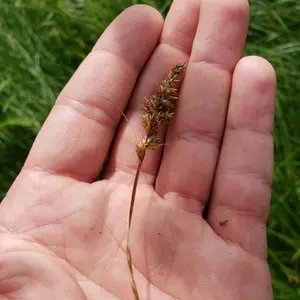
Clustered field sedge Carex praegracilis
2×1 ft · Sun–part shade · Evergreen
Premier no-mow lawn swap: mow short for turf or leave long for a meadow. Takes light foot traffic; wants regular water to stay green.
139 plants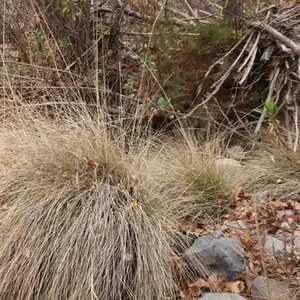
Deer grass Muhlenbergia rigens
4×3.5 ft · Full sun · Evergreen
Evergreen native clump with tall arching flower spikes for a strong accent. Keep it back from the house, out of the first 5 ft.
8 plants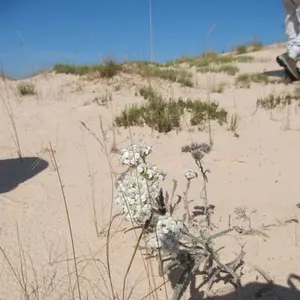
Common yarrow Achillea millefolium
2×1.5 ft · Full sun · Evergreen · Blooms late spring to summer
California native that knits into a soft, fern-leafy mat, staying low with white summer flower stalks. Tough and easygoing.
42 plants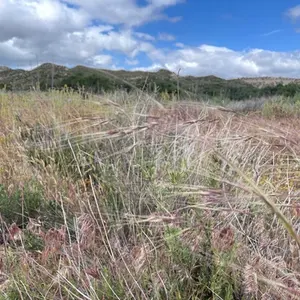
Purple needlegrass Stipa pulchra
2×3 ft · Sun–part shade
California's native state grass, great for erosion control and reseeds on its own. Keep it out of the first 5 ft by the house.
21 plants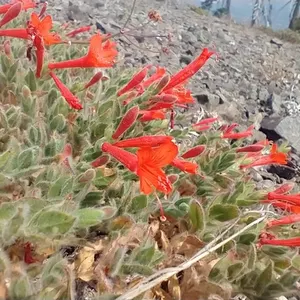
California fuchsia Epilobium canum
3.5×1.5 ft · Full sun · Blooms late summer to fall
Scarlet trumpet flowers late summer to fall make it a hummingbird favorite. Cut to the ground each winter for a fresh flush.
6 plants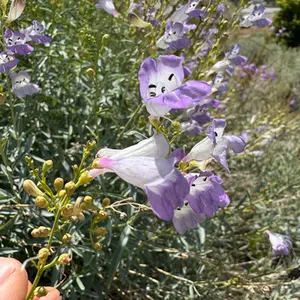
Foothill Penstemon 'Margarita BOP' Penstemon heterophyllus 'Margarita BOP'
2×1.5 ft · Full sun · Evergreen · Blooms spring to early summer
Electric blue-to-fuchsia tubular flowers pull in hummingbirds and native bees. The toughest, longest-lived foothill penstemon.
21 plants
Plant photos from iNaturalist contributors · CC BY / CC0. See the full plant guide →
🔥 Fire-smart placement: Deer grass, Purple needlegrass are drought-tolerant but more flammable — keep them out of the 0–5 ft strip against the house (Zone 0) and use the low-flammability plants there instead. Want a palette that's fire-safe right up to the wall? Try the look.
You're converting about 400 sq ft of lawn. Many Sacramento-area water providers pay a per-square-foot cash rebate for replacing lawn with low-water landscaping (often called Cash for Grass) — programs and rates change, so check your own provider's current offer and rules before you start.
Rebate programs usually want low-water plants covering a set share of the area and drip irrigation in place. This plan reaches roughly 100% live-plant coverage at maturity — GoGarden doesn't determine eligibility or amounts.
Want it installed?
Let a local pro know you're interested · no obligation
Plant counts use triangular on-center spacing and are planning estimates — buy a few extra for losses and confirm spacing with your nursery. Water use follows WUCOLS for the Central Valley; flammability guidance follows CAL FIRE / UC ANR; costs are 2026 retail assumptions, not quotes. Palette drawn for Sacramento (USDA zone 9b) — 48 plants and growing.
Carson City water rules: watering days, not a turf rebate
The first thing to understand about converting a lawn in Carson City is that the savings come from using less water, not from a rebate. Your water comes from Carson City Public Works, Water Division — the city's own utility — and its conservation program is built around a summer watering schedule rather than cash-for-grass. From June 1 through September 30, outdoor watering is assigned by address: odd-numbered homes water Tuesday, Thursday, and Saturday; even-numbered homes water Sunday, Wednesday, and Friday; nobody waters on Mondays; and no sprinklers are allowed between 10 a.m. and 6 p.m., when the high-desert sun would evaporate most of it. City ordinance also prohibits letting water run wastefully into the street, gutter, or storm drain, and newly installed plantings usually get a short establishment exemption. A thirsty fescue lawn pushes right up against those limits every summer. A low-water yard on drip barely notices them — it needs a fraction of the water and far less of that scheduled sprinkler time. Any incentive or smart-controller offer, if one exists in a given year, would come through the Water Division, so confirm the current rules and any program with them before you plan. Treat any rebate figure you read online as unverified until the city spells it out.
Why replace your lawn in Eagle Valley's high desert
Carson City is genuinely high desert, and that changes the math on a lawn. Eagle Valley floors sit around 4,700 feet in USDA zone 7a, with cold-air-drainage pockets that can behave more like zone 6b — so late-spring and early-fall frosts shorten the growing season compared with a mild-winter valley like Sacramento. Summers are hot and extremely dry, with intense UV, gusty afternoon wind off the Carson Range, single-digit humidity, and big day-to-night temperature swings that stress cool-season turf. The soils don't help a lawn either: they're typically alkaline and often sandy or rocky, so they drain fast and won't hold moisture the way turf wants. Holding a green lawn through all that means heavy, frequent watering right when the city's schedule tightens and evaporation peaks — and it still tends to brown out in wind and heat. A well-designed low-water landscape flips the problem: plants that evolved for exactly this basin shrug off the sun, wind, and lean soil, stay handsome through a hot August, and free you from standing over a sprinkler timer. In neighborhoods from the West Side Historic District to Silver Oak, a thoughtful high-desert yard reads as an upgrade, not a sacrifice.
Great Basin plants that thrive in Carson City
The winning palette here is Great Basin and high-desert natives that are built for cold winters, hot dry summers, and alkaline soil — not Sacramento or Southern California species dropped in as if the climate matched. For structure, lean on big sagebrush, rubber rabbitbrush, antelope bitterbrush, curlleaf mountain mahogany, fernbush, desert peach, Apache plume, three-leaf sumac, Woods' rose, and Dorr's sage, with adapted Russian sage for a softer look. For color that handles the UV and swings, plant firecracker and Palmer's penstemon, sulphur-flower buckwheat, blue (Lewis) flax, Munro's globemallow, showy four o'clock, tufted evening-primrose, angelita daisy, blanketflower, and fire chalice (hummingbird trumpet). For that low, moving lawn-alternative feel, native bunchgrasses like Indian ricegrass, Great Basin wildrye, blue grama, and Sandberg bluegrass give texture on very little water, and kinnikinnick or plains prickly pear fill in as tough groundcover and accent. Group everything by water need, put it all on drip, and top with a few inches of mulch or rock gravel to hold what little moisture there is. Because of the frost pockets, plant in spring or early fall — never mid-winter — and give roots time to establish before the first hard summer. The planner below helps you lay out beds and pick a palette that fits your yard's sun, size, and soil.
Replacing a lawn in Carson City — FAQs
Who provides my water in Carson City?
Almost all Carson City homes are served by Carson City Public Works, Water Division — the consolidated city's own municipal utility, which meters your water and sends the combined water, sewer, and stormwater bill through Carson City Utility Billing. It is a separate utility from TMWA, which serves Reno and Sparks. A few edge properties may be on private wells or a small community system, so check the name on your bill to be sure.
Is there a turf rebate or 'cash for grass' in Carson City?
No. Unlike Southern Nevada (Las Vegas and Henderson), northern Nevada does not have a cash-for-grass turf-buyback, and the Carson City Water Division does not advertise a per-square-foot lawn-replacement rebate. The savings from converting your lawn here come from a lower water bill and using less water — not a rebate check. We don't quote a dollar figure on purpose; if any limited incentive ever opens, confirm it directly with the Water Division before you plan around it.
What are Carson City's summer watering rules?
From June 1 through September 30, watering is assigned by address: odd-numbered homes water Tuesday, Thursday, and Saturday; even-numbered homes water Sunday, Wednesday, and Friday; no one waters on Mondays; and no sprinklers run between 10 a.m. and 6 p.m. Letting water run wastefully to the street or gutter is also prohibited. A low-water yard needs far less of this scheduled watering — but you should still follow the schedule while new plants establish. Confirm current rules with the Water Division.
What should I plant instead of grass at 4,700 feet in Carson City?
Choose Great Basin and high-desert natives suited to zone 7a with its frost pockets: big sagebrush, rubber rabbitbrush, curlleaf mountain mahogany, desert peach, and Apache plume for structure; penstemon, blue flax, globemallow, and blanketflower for color; and Indian ricegrass, blue grama, or Sandberg bluegrass for a low, grassy feel. Group by water need, run drip irrigation, mulch or gravel well, and plant in spring or early fall to dodge frost. The planner helps you pick a palette for your yard.
Does GoGarden install my new yard?
No — GoGarden is a free planning tool, not a landscaping contractor. We help you design the conversion, understand Carson City's water rules honestly, and, if you'd like, connect with local pros who can handle the installation. We don't install anything ourselves, and using the planner costs nothing.
Areas we serve
Serving homeowners across West Side Historic District, Kings Canyon, Lakeview, Silver Oak, Timberline, Empire, Schulz Ranch and the greater Carson City area.
Lawn conversion in nearby cities
aSaaSin Ventures LLC operates GoGarden — a free planning tool that can connect you with a local pro, not the installing contractor. Rebate programs, rates, and eligibility are set by your water provider and change often; confirm the current terms with them, and get any required written pre-approval, before removing turf. Plant and cost figures are planning estimates.