Dayton, CA · Lawn conversion
Replace Your Lawn in Dayton, NV with a High-Desert Yard
Dayton sits on the terraces of the Carson River at about 4,500 feet, and its high-desert summers are hard on a lawn: long, dry stretches of heat, relentless UV, and afternoon valley wind that wicks moisture out of grass faster than a sprinkler can put it back. Winters swing the other way, with hard frosts that brown out cool-season turf for months. Trading your front lawn for high-desert plants ends the constant watering, the weekly mow, and the losing fight against alkaline, rocky river-terrace soil — and it steadily lowers your Lyon County Utilities water bill. Northern Nevada doesn't have a Las Vegas-style cash-for-grass rebate, so the payoff here is a smaller bill and less water used, not a check. Use the free planner below to sketch your new yard, then take a real plan to a local installer if you want one.
Your water providerLyon County Utilities — Dayton Valley Water System. The county utility (Water & Sewer Business Office in Dayton, (775) 246-6220) bills most Dayton homes for both water and sewer. A few outlying properties toward the edges of the valley draw from private wells or a small community system instead, so check the utility name printed on your latest bill to confirm who serves your address.
Be careful with "Nevada turf rebate" headlines: the well-known Water Smart Landscapes program that pays several dollars a square foot to remove grass is run by the Southern Nevada Water Authority for the Las Vegas area, and it exists because that region must cut Colorado River use — it does not apply to Dayton or anywhere in Lyon County. Northern Nevada draws on the Carson River and local groundwater and has not adopted a cash-for-grass turf buyback, so we won't promise you a rebate that isn't there. Your savings come from using less water and paying a lower Lyon County Utilities bill, plus far less time and money on mowing, fertilizer, and sprinkler repairs. Lyon County Utilities can change its rates, watering-schedule rules, or add a conservation incentive at any time, so contact them directly to confirm what — if anything — is currently offered before you plan around it.
1 Pick a look
A knee-high tapestry of native grasses and sedges threaded with seasonal flowers — the relaxed, walkable look that reads as a meadow, not a cactus garden.
2 How much lawn are you replacing?
Not sure of your square footage? Size it by shape
Measure the lawn you're removing. For an odd shape, add a couple of rectangles together.
3 Your plant plan
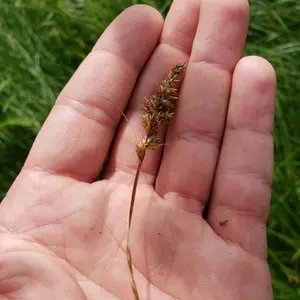
Clustered field sedge Carex praegracilis
2×1 ft · Sun–part shade · Evergreen
Premier no-mow lawn swap: mow short for turf or leave long for a meadow. Takes light foot traffic; wants regular water to stay green.
139 plants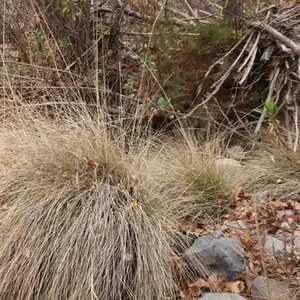
Deer grass Muhlenbergia rigens
4×3.5 ft · Full sun · Evergreen
Evergreen native clump with tall arching flower spikes for a strong accent. Keep it back from the house, out of the first 5 ft.
8 plants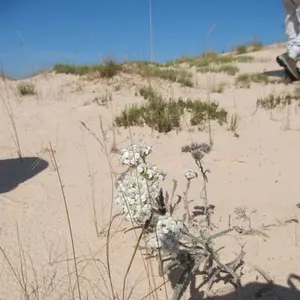
Common yarrow Achillea millefolium
2×1.5 ft · Full sun · Evergreen · Blooms late spring to summer
California native that knits into a soft, fern-leafy mat, staying low with white summer flower stalks. Tough and easygoing.
42 plants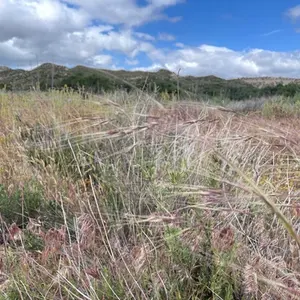
Purple needlegrass Stipa pulchra
2×3 ft · Sun–part shade
California's native state grass, great for erosion control and reseeds on its own. Keep it out of the first 5 ft by the house.
21 plants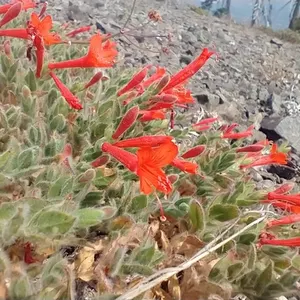
California fuchsia Epilobium canum
3.5×1.5 ft · Full sun · Blooms late summer to fall
Scarlet trumpet flowers late summer to fall make it a hummingbird favorite. Cut to the ground each winter for a fresh flush.
6 plants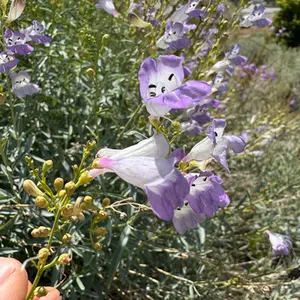
Foothill Penstemon 'Margarita BOP' Penstemon heterophyllus 'Margarita BOP'
2×1.5 ft · Full sun · Evergreen · Blooms spring to early summer
Electric blue-to-fuchsia tubular flowers pull in hummingbirds and native bees. The toughest, longest-lived foothill penstemon.
21 plants
Plant photos from iNaturalist contributors · CC BY / CC0. See the full plant guide →
🔥 Fire-smart placement: Deer grass, Purple needlegrass are drought-tolerant but more flammable — keep them out of the 0–5 ft strip against the house (Zone 0) and use the low-flammability plants there instead. Want a palette that's fire-safe right up to the wall? Try the look.
You're converting about 400 sq ft of lawn. Many Sacramento-area water providers pay a per-square-foot cash rebate for replacing lawn with low-water landscaping (often called Cash for Grass) — programs and rates change, so check your own provider's current offer and rules before you start.
Rebate programs usually want low-water plants covering a set share of the area and drip irrigation in place. This plan reaches roughly 100% live-plant coverage at maturity — GoGarden doesn't determine eligibility or amounts.
Want it installed?
Let a local pro know you're interested · no obligation
Plant counts use triangular on-center spacing and are planning estimates — buy a few extra for losses and confirm spacing with your nursery. Water use follows WUCOLS for the Central Valley; flammability guidance follows CAL FIRE / UC ANR; costs are 2026 retail assumptions, not quotes. Palette drawn for Sacramento (USDA zone 9b) — 48 plants and growing.
The honest rebate picture in Dayton: no cash-for-grass buyback here
If you've read about Nevada paying homeowners several dollars a square foot to tear out their lawn, that's the Southern Nevada Water Authority's Water Smart Landscapes rebate — a Las Vegas-area program driven by strict limits on Colorado River water. It does not reach Dayton. Here in Lyon County, your water comes from the Carson River system and local groundwater through Lyon County Utilities' Dayton Valley Water System, and northern Nevada has not put a turf-buyback rebate in place. We'd rather tell you that plainly than dangle a rebate that doesn't exist for your address. That doesn't mean a conversion isn't worth it — it just means the return shows up on your monthly bill instead of as a one-time check. A cool-season lawn is by far the thirstiest thing most Dayton yards grow, so cutting it out is where the real, ongoing water savings live. Utilities also change their programs, watering-day rules, and rates over time, and Lyon County Utilities could add an incentive or tighten schedules in any given year. So before you plan around any program, call the Water & Sewer Business Office and ask what's current. GoGarden is a free planning tool — we don't administer rebates or speak for the county.
Why replace your lawn in Dayton's high desert
Dayton's climate is classic high desert. At roughly 4,500 feet on the Carson River terraces, days can bake while nights drop sharply — big day-to-night swings, very low humidity, thin-air UV, and steady valley wind all pull moisture out of a lawn and stress cool-season grass through the summer. Then winter flips it: this is USDA zone 7a, with colder pockets closer to 6b, and hard frosts brown turf out for a good chunk of the year anyway. Holding a green fescue or bluegrass lawn through all that means running sprinklers hard and often, straight into fast-draining, alkaline, sandy-to-rocky river-terrace soil that doesn't hold water. Your front yard is also the face of the property — in Old Town Dayton, along the Dayton Valley golf corridor, or out in Santa Maria Ranch, a well-designed high-desert landscape of sagebrush, rabbitbrush, and flowering perennials reads as intentional and handsome, not neglected. Converting turf cuts the biggest summer water draw on the place, ends the weekly mow in the heat and wind, and — built on drip with mulch or rock — stays good-looking year-round instead of going patchy and brown by August. Less water, less upkeep, and curb appeal that actually suits where you live.
High-desert plants that thrive in the Carson River valley
Dayton's palette should come from the Great Basin, not a Sacramento or Southern California plant list — plants built for cold winters, alkaline soil, and dry heat. For structure, big sagebrush, rubber rabbitbrush, antelope bitterbrush, desert peach, Apache plume, and fernbush give year-round form and shrug off wind and drought once rooted. For color, high-desert perennials carry the show: firecracker and Palmer's penstemon, sulphur-flower buckwheat, blue (Lewis) flax, Munro's globemallow, showy four o'clock, and blanketflower all bloom on little water. If you miss the soft, green look of a lawn, native bunchgrasses like Indian ricegrass, blue grama, Sandberg bluegrass, and Great Basin wildrye give movement and a low-mow, meadow feel that fits the valley. The method is the same one that works across the high desert: group plants by how much water they want, put everything on drip so you water roots and not air, and top the beds with a few inches of mulch or local rock to hold what little moisture there is. One honest caveat on timing — with late-spring and early-fall frosts, the safe windows to plant are spring after the frost risk passes and early fall while the soil is still warm, so new plants root in before winter. Skip tender, mild-climate species that a Dayton cold snap will kill.
Replacing a lawn in Dayton — FAQs
Who provides my water in Dayton?
Most Dayton homes are served by Lyon County Utilities through its Dayton Valley Water System, which handles both water and sewer; the Water & Sewer Business Office in Dayton can be reached at (775) 246-6220. Some outlying properties toward the edges of the valley are on private wells or a small community system instead. Check the utility name printed on your bill to be sure who serves your address — it's the provider to call about rates or any conservation rules.
Is there a rebate for replacing my lawn in Dayton?
Not the kind you may have read about. The Nevada program that pays several dollars a square foot to remove turf is the Southern Nevada Water Authority's Las Vegas-area rebate, tied to Colorado River limits — it does not apply to Dayton or Lyon County. Northern Nevada has not adopted a cash-for-grass buyback, so we won't promise one. Programs can change, though, so contact Lyon County Utilities to confirm whether any incentive is currently offered before you count on it.
If there's no rebate, is converting my lawn still worth it?
Yes — the savings just come from your bill instead of a check. A cool-season lawn is usually the single thirstiest thing in a Dayton yard, and running sprinklers through hot, windy, low-humidity summers is expensive. Replacing turf with high-desert plants on drip steadily lowers your Lyon County Utilities water use and bill, and cuts the ongoing cost and time of mowing, fertilizer, and sprinkler repairs. The return is ongoing rather than one-time.
What should I plant instead of grass in Dayton?
Lean into Great Basin natives and hardy xeric plants suited to high-desert zone 7a: big sagebrush, rubber rabbitbrush, antelope bitterbrush, desert peach, and Apache plume for structure; penstemons, sulphur-flower buckwheat, blue flax, and globemallow for color; and native bunchgrasses like Indian ricegrass and blue grama for a low-mow, lawn-like feel. Because Dayton gets late-spring and early-fall frosts, plant in spring after the frost passes or in early fall, and skip tender mild-climate species. The planner helps you lay out beds and pick a palette that fits your yard.
Does GoGarden install my new yard?
No — GoGarden is a free planning tool, not a landscaping contractor. We help you design your high-desert conversion, understand the honest water-savings picture in northern Nevada, and, if you'd like, connect with local pros who can handle the installation. We don't install anything ourselves, and using the planner costs nothing.
Areas we serve
Serving homeowners across Old Town Dayton, Dayton Valley, Santa Maria Ranch, Riverpark, Sutro, Chaparral, Highland Village and the greater Dayton area.
Lawn conversion in nearby cities
aSaaSin Ventures LLC operates GoGarden — a free planning tool that can connect you with a local pro, not the installing contractor. Rebate programs, rates, and eligibility are set by your water provider and change often; confirm the current terms with them, and get any required written pre-approval, before removing turf. Plant and cost figures are planning estimates.