South Lake Tahoe, CA · Lawn conversion
Replace Your South Lake Tahoe Lawn With a Low-Water, Lake-Friendly Yard
South Lake Tahoe sits at about 6,200 feet in the Lake Tahoe Basin, and that changes almost everything about a lawn. This is USDA zone 6b with deep winter snow, a growing season shorter than 100 days, and frost possible in nearly any month — a world away from the mild valleys most lawn-care advice is written for. A thirsty turf lawn here means fighting a short season, feeding fertilizer that can wash toward the lake, and mowing a strip of grass that's under snow half the year. Swapping it for cold-hardy native plants cuts irrigation, helps protect Lake Tahoe's famous clarity, and builds in wildfire defensible space. Use the free planner below to sketch your yard, then take a real plan to STPUD and, if you want, a local pro. GoGarden is a planning tool — we don't sell or install anything.
Your water providerSouth Tahoe Public Utility District (STPUD) supplies both water and sewer to the great majority of South Lake Tahoe. A handful of pockets are served instead by small private systems — chiefly Lukins Brothers Water Company, the Tahoe Keys water utility, and Lakeside Park — so check the name printed on your bill before you plan around any program.
Unlike most Sierra towns, STPUD actually runs a Turf Buy Back Program that pays water customers to replace irrigated lawn with Tahoe-friendly, water-wise plants. The catches matter: you apply through STPUD's WaterSmart customer portal and must get a pre-conversion site visit and approval before you remove a single blade — tear the lawn out first and you can disqualify yourself — and you commit to keeping the new landscape, with a minimum share of living plant cover, for several years. We don't quote a rate or cap here on purpose: amounts, funding, and rules change, and eligibility depends on your property. Confirm current terms directly with STPUD, and note that if a private company like Lukins Brothers bills you, this program isn't yours — ask your own provider. For the erosion and lake-clarity side, the Tahoe Resource Conservation District offers free BMP site evaluations; that's water-quality help, not a lawn buy-back.
1 Pick a look
A knee-high tapestry of native grasses and sedges threaded with seasonal flowers — the relaxed, walkable look that reads as a meadow, not a cactus garden.
2 How much lawn are you replacing?
Not sure of your square footage? Size it by shape
Measure the lawn you're removing. For an odd shape, add a couple of rectangles together.
3 Your plant plan
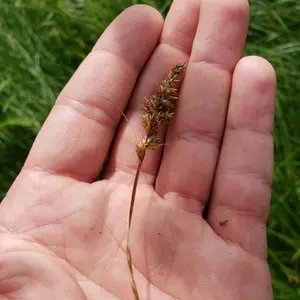
Clustered field sedge Carex praegracilis
2×1 ft · Sun–part shade · Evergreen
Premier no-mow lawn swap: mow short for turf or leave long for a meadow. Takes light foot traffic; wants regular water to stay green.
139 plants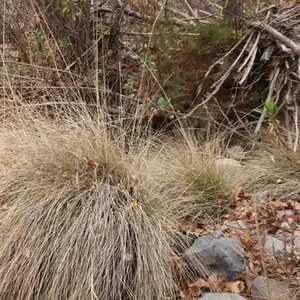
Deer grass Muhlenbergia rigens
4×3.5 ft · Full sun · Evergreen
Evergreen native clump with tall arching flower spikes for a strong accent. Keep it back from the house, out of the first 5 ft.
8 plants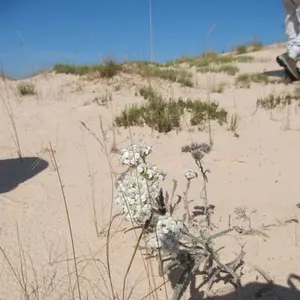
Common yarrow Achillea millefolium
2×1.5 ft · Full sun · Evergreen · Blooms late spring to summer
California native that knits into a soft, fern-leafy mat, staying low with white summer flower stalks. Tough and easygoing.
42 plants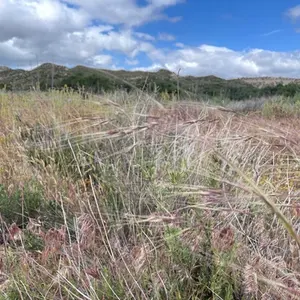
Purple needlegrass Stipa pulchra
2×3 ft · Sun–part shade
California's native state grass, great for erosion control and reseeds on its own. Keep it out of the first 5 ft by the house.
21 plants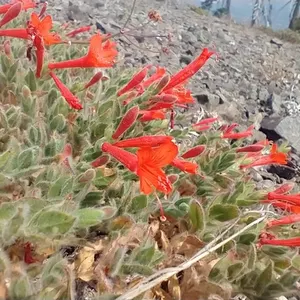
California fuchsia Epilobium canum
3.5×1.5 ft · Full sun · Blooms late summer to fall
Scarlet trumpet flowers late summer to fall make it a hummingbird favorite. Cut to the ground each winter for a fresh flush.
6 plants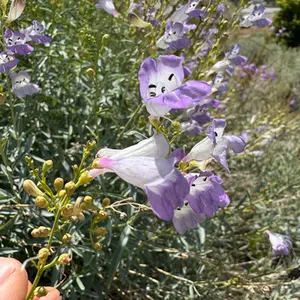
Foothill Penstemon 'Margarita BOP' Penstemon heterophyllus 'Margarita BOP'
2×1.5 ft · Full sun · Evergreen · Blooms spring to early summer
Electric blue-to-fuchsia tubular flowers pull in hummingbirds and native bees. The toughest, longest-lived foothill penstemon.
21 plants
Plant photos from iNaturalist contributors · CC BY / CC0. See the full plant guide →
🔥 Fire-smart placement: Deer grass, Purple needlegrass are drought-tolerant but more flammable — keep them out of the 0–5 ft strip against the house (Zone 0) and use the low-flammability plants there instead. Want a palette that's fire-safe right up to the wall? Try the look.
You're converting about 400 sq ft of lawn. Many Sacramento-area water providers pay a per-square-foot cash rebate for replacing lawn with low-water landscaping (often called Cash for Grass) — programs and rates change, so check your own provider's current offer and rules before you start.
Rebate programs usually want low-water plants covering a set share of the area and drip irrigation in place. This plan reaches roughly 100% live-plant coverage at maturity — GoGarden doesn't determine eligibility or amounts.
Want it installed?
Let a local pro know you're interested · no obligation
Plant counts use triangular on-center spacing and are planning estimates — buy a few extra for losses and confirm spacing with your nursery. Water use follows WUCOLS for the Central Valley; flammability guidance follows CAL FIRE / UC ANR; costs are 2026 retail assumptions, not quotes. Palette drawn for Sacramento (USDA zone 9b) — 48 plants and growing.
Who bills you for water — and the STPUD turf buy-back
Most of South Lake Tahoe — Al Tahoe, Bijou, the Sierra Tract, and on — gets water and sewer from the South Tahoe Public Utility District (STPUD), the same agency that reads your meter. A few neighborhoods sit inside small private systems instead: Lukins Brothers Water Company, the Tahoe Keys water utility, and Lakeside Park each serve their own pockets, so the name on your bill is what determines your options. If STPUD is your provider, it runs something most mountain towns don't: a Turf Buy Back Program that pays customers to swap irrigated lawn for water-wise, Tahoe-friendly plants. The step people trip over is sequence — you apply through STPUD's WaterSmart portal and need a pre-conversion site visit and written approval before you pull out any grass; do it backwards and you can lose the rebate. You also commit to keeping the new planting, with a minimum amount of living cover, for several years. Because rates, funding, and eligibility rules shift from season to season, treat any figure you read online as unconfirmed and get the current terms from STPUD directly. If a private company bills you, ask them what, if anything, they offer.
Lake clarity, snow, and fire — why a Tahoe conversion is its own thing
Two local realities shape every yard in the Basin. First, Lake Tahoe's legendary clarity is protected by the Tahoe Regional Planning Agency (TRPA), whose Best Management Practice (BMP) rules ask you to keep sediment and fertilizer from washing off your property and into the lake. A fertilized lawn on a slope is exactly the runoff those rules target; a mulched bed of natives that lets snowmelt soak in on-site is the opposite — which is why a low-water conversion and lake protection pull in the same direction. The Tahoe Resource Conservation District offers free BMP site evaluations to help homeowners add infiltration, and designing your beds around that is smart. Second, this is high wildfire country — the 2021 Caldor Fire forced a full evacuation of South Lake Tahoe — so defensible space is not optional. A conversion is your chance to build it in: keep the first five feet around the house lean and non-combustible (gravel, hardscape, low irrigated groundcover), and push shrubs, especially resinous ones, farther out with space between them. Then there's snow. Plan for where plowed and shoveled snow will pile, keep plants back from driveways and rooflines where road cinder and snow-load land, and expect beds to vanish under snow for months.
Cold-hardy, lake-friendly plants that thrive at 6,200 feet
Forget the mild-winter, California-lowland and hot-desert-valley palettes you'll see online — most of those plants die in a Tahoe winter. At about zone 6b, with cold pockets colder still, you want species hardy to roughly zone 5, drawn from the Sierra's own subalpine and sagebrush country. For structure, the toughest Great Basin shrubs anchor a bed: big sagebrush, rubber rabbitbrush, antelope bitterbrush, and mountain snowberry, alongside Sierra montane natives like greenleaf and pinemat manzanita, tobacco brush and mahala mat ceanothus, wax currant, mountain mahogany, and Woods' rose. For color that shrugs off cold nights, plant mountain and other proven-hardy penstemons, lupines, mule ears, sulphur buckwheat, showy milkweed, and yarrow. For the soft, moving, low-mow feel people miss from a lawn, native bunchgrasses carry it: Idaho fescue, Great Basin wildrye, squirreltail, and native sedges and rushes in the damp spots. Kinnikinnick makes a hardy evergreen groundcover. Two honest caveats: some of the best natives — manzanita, many ceanothus, junipers — are resinous, so keep them out of the five-foot zone against the house for fire safety. And mind the season — plant after snowmelt in late spring or early summer so roots establish before winter, group everything by water need, run it on drip, and mulch to hold moisture and keep soil out of the lake.
Replacing a lawn in South Lake Tahoe — FAQs
Who provides my water in South Lake Tahoe?
The great majority of the city is served by the South Tahoe Public Utility District (STPUD), which handles both water and sewer. Some pockets fall under small private systems instead — Lukins Brothers Water Company, the Tahoe Keys water utility, and Lakeside Park among them. Check the name on your bill, because your rebate options depend entirely on who your provider is.
Is there a rebate for replacing my lawn in South Lake Tahoe?
If STPUD is your provider, yes — it runs a Turf Buy Back Program that pays customers to replace irrigated lawn with water-wise, Tahoe-friendly landscaping. We don't list a dollar amount here because rates, funding, and rules change: confirm the current terms with STPUD. Two things are consistent, though — you must apply through the WaterSmart portal and get a pre-conversion site visit and approval before you remove any grass, and you commit to maintaining the new planting for several years. If a private water company bills you, this program isn't yours; ask that company directly.
Will a lawn conversion help with Lake Tahoe's clarity rules and wildfire defensible space?
It can do both. TRPA's Best Management Practice (BMP) rules are about keeping sediment and fertilizer out of Lake Tahoe, and a mulched, low-water native bed that soaks up snowmelt on-site is far more lake-friendly than a fertilized lawn that sheds runoff — the Tahoe Resource Conservation District offers free BMP evaluations to help. For fire, use the conversion to build defensible space: keep the first five feet around the house non-combustible and space shrubs out, especially resinous ones like manzanita and juniper. After the 2021 Caldor Fire, that lines up naturally with a water-wise design.
What should I plant instead of grass at 6,200 feet?
Cold-hardy Sierra and Great Basin natives rated to about zone 5, not mild-climate or desert-valley species that freeze out here. Structure comes from big sagebrush, rabbitbrush, bitterbrush, mountain snowberry, greenleaf and pinemat manzanita, ceanothus, and mountain mahogany; color from hardy penstemons, lupines, mule ears, buckwheat, and yarrow; and a soft, low-mow feel from native bunchgrasses like Idaho fescue and Great Basin wildrye. Plant after snowmelt in late spring or early summer so roots establish before winter, keep resinous shrubs away from the house for fire safety, and run everything on drip with mulch.
Does GoGarden install my new yard?
No — GoGarden is a free planning tool, not a landscaping contractor. We help you design the conversion, understand STPUD's turf buy-back and the TRPA and wildfire rules that apply in the Basin, and, if you'd like, connect you with local pros who can handle the install and the rebate paperwork. We don't install anything ourselves, and the planner costs nothing to use.
Areas we serve
Serving homeowners across Al Tahoe, Bijou, Tahoe Keys, Sierra Tract, Gardner Mountain, Montgomery Estates, Meyers and the greater South Lake Tahoe area.
Lawn conversion in nearby cities
aSaaSin Ventures LLC operates GoGarden — a free planning tool that can connect you with a local pro, not the installing contractor. Rebate programs, rates, and eligibility are set by your water provider and change often; confirm the current terms with them, and get any required written pre-approval, before removing turf. Plant and cost figures are planning estimates.