Truckee, CA · Lawn conversion
Low-Water Lawn Conversion in Truckee, CA
Truckee sits at roughly 5,800 to 6,000 feet on the Sierra crest, and its landscape rules are nothing like the Central Valley or the Southern California deserts most "drought" pages are written for. This is cold subalpine country — USDA zone 6a to 6b, dropping to 5b in cold-air pockets, with winter lows that can reach 15 to 20 degrees below zero. Snow, not summer heat, is the defining force here: deep snowpack, snow that has to be plowed and piled somewhere, and a frost-free window that can run under 100 days, with frost possible in almost any month. A lawn in Truckee isn't really a desert problem; it's a short-season, snowmelt, and wildfire problem. Turf drinks well over 50 gallons per square foot a year through one brief, thirsty summer, while a well-chosen native planting gets by on a fraction of that. Your water comes from the Truckee Donner Public Utility District (TDPUD), which is pushing hard on outdoor conservation ahead of California's 2027 water-efficiency rules. GoGarden is a free planning tool — not an installer or a nursery — that helps you sketch a snow-smart, fire-wise, low-water yard before you spend a dollar.
Your water providerTruckee Donner Public Utility District (TDPUD)
Truckee does not have a Las Vegas-style, guaranteed cash-for-grass turf buyback. That said, TDPUD has launched a real water-conservation push ahead of California's 2027 efficiency rules — including rebates tied to efficiency upgrades and outdoor water use, plus a Native Garden Photo Contest that awards water-bill credits. Programs, amounts, and eligibility change, so confirm what's currently offered directly with TDPUD (tdpud.org or 530-587-3896) before you count on any specific dollar figure. GoGarden can't and won't promise a rebate amount.
1 Pick a look
A knee-high tapestry of native grasses and sedges threaded with seasonal flowers — the relaxed, walkable look that reads as a meadow, not a cactus garden.
2 How much lawn are you replacing?
Not sure of your square footage? Size it by shape
Measure the lawn you're removing. For an odd shape, add a couple of rectangles together.
3 Your plant plan
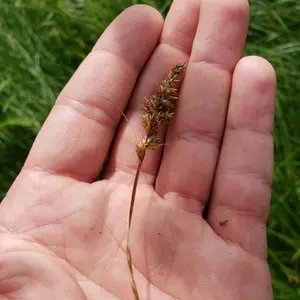
Clustered field sedge Carex praegracilis
2×1 ft · Sun–part shade · Evergreen
Premier no-mow lawn swap: mow short for turf or leave long for a meadow. Takes light foot traffic; wants regular water to stay green.
139 plants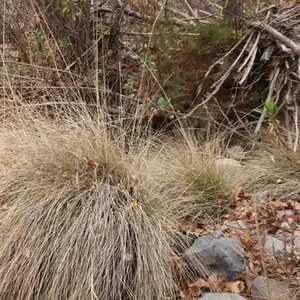
Deer grass Muhlenbergia rigens
4×3.5 ft · Full sun · Evergreen
Evergreen native clump with tall arching flower spikes for a strong accent. Keep it back from the house, out of the first 5 ft.
8 plants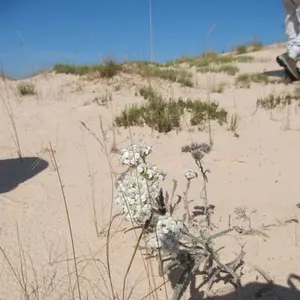
Common yarrow Achillea millefolium
2×1.5 ft · Full sun · Evergreen · Blooms late spring to summer
California native that knits into a soft, fern-leafy mat, staying low with white summer flower stalks. Tough and easygoing.
42 plants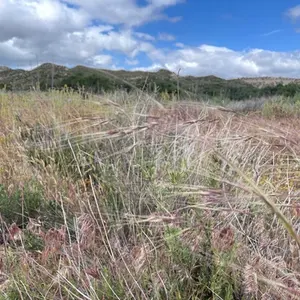
Purple needlegrass Stipa pulchra
2×3 ft · Sun–part shade
California's native state grass, great for erosion control and reseeds on its own. Keep it out of the first 5 ft by the house.
21 plants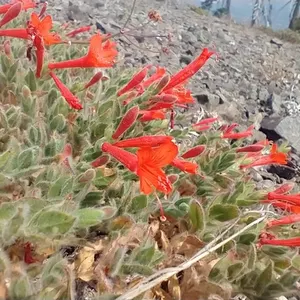
California fuchsia Epilobium canum
3.5×1.5 ft · Full sun · Blooms late summer to fall
Scarlet trumpet flowers late summer to fall make it a hummingbird favorite. Cut to the ground each winter for a fresh flush.
6 plants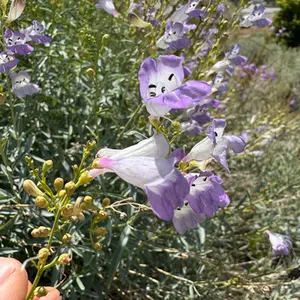
Foothill Penstemon 'Margarita BOP' Penstemon heterophyllus 'Margarita BOP'
2×1.5 ft · Full sun · Evergreen · Blooms spring to early summer
Electric blue-to-fuchsia tubular flowers pull in hummingbirds and native bees. The toughest, longest-lived foothill penstemon.
21 plants
Plant photos from iNaturalist contributors · CC BY / CC0. See the full plant guide →
🔥 Fire-smart placement: Deer grass, Purple needlegrass are drought-tolerant but more flammable — keep them out of the 0–5 ft strip against the house (Zone 0) and use the low-flammability plants there instead. Want a palette that's fire-safe right up to the wall? Try the look.
You're converting about 400 sq ft of lawn. Many Sacramento-area water providers pay a per-square-foot cash rebate for replacing lawn with low-water landscaping (often called Cash for Grass) — programs and rates change, so check your own provider's current offer and rules before you start.
Rebate programs usually want low-water plants covering a set share of the area and drip irrigation in place. This plan reaches roughly 100% live-plant coverage at maturity — GoGarden doesn't determine eligibility or amounts.
Want it installed?
Let a local pro know you're interested · no obligation
Plant counts use triangular on-center spacing and are planning estimates — buy a few extra for losses and confirm spacing with your nursery. Water use follows WUCOLS for the Central Valley; flammability guidance follows CAL FIRE / UC ANR; costs are 2026 retail assumptions, not quotes. Palette drawn for Sacramento (USDA zone 9b) — 48 plants and growing.
Why a Truckee lawn is a snow-country problem, not a desert one
Most low-water advice is written for hot, dry, mild-winter places. Truckee is the opposite: cool, snowy, and brutally cold in winter. A turf lawn struggles here for reasons that have little to do with the desert. The growing season is short — realistically 60 to 100 frost-free days — so grass greens up late, browns early, and demands its heaviest irrigation during the few hot weeks of July and August. Then there's the snow. Truckee routinely sees many feet of it, and every driveway, walk, and roofline sheds or gets plowed into piles that can crush, smother, and salt whatever grows beneath. Lawn edges along plow routes take a beating, and spring snowmelt can leave soggy, compacted turf that's slow to recover. Converting to low-water landscaping lets you design around these realities instead of fighting them. You can route snow storage onto gravel or hardscape rather than living plants, choose shrubs stiff enough to shrug off snow load or flexible enough to bend and rebound, and cut the summer irrigation that a lawn simply can't do without. Well-drained decomposed-granite soils and strong high-elevation UV make thirsty turf especially inefficient up here — which is exactly why a native, snowmelt-fed planting pays off.
A cold-hardy, zone 5b plant palette built for Truckee
The single biggest mistake in a Truckee conversion is planting a California-lowland or desert-valley palette that freezes out at 5b. Skip the tender stuff and lean on plants that already thrive on these slopes. From the surrounding Great Basin sagebrush zone: big sagebrush (Artemisia tridentata), rubber rabbitbrush (Ericameria nauseosa) for late-summer gold, antelope bitterbrush (Purshia tridentata), and mountain snowberry (Symphoricarpos). From the Sierra montane forest: tobacco brush and mountain whitethorn ceanothus (Ceanothus velutinus and C. cordulatus), greenleaf manzanita (Arctostaphylos patula), Sierra and wax currant (Ribes), and curl-leaf mountain mahogany (Cercocarpus ledifolius). For color and pollinators, reach for penstemons proven to zone 4-5, native lupines, mule ears (Wyethia), buckwheats (Eriogonum), blue flax, and common yarrow. For a soft, meadowy look without a lawn, cold-hardy bunchgrasses and sedges carry the design: Idaho fescue (Festuca idahoensis), Great Basin wildrye (Leymus cinereus), and native sedges and rushes for damper spots. These species are adapted to deep cold, a short season, lean granitic soils, and snowmelt moisture — so once established, most need little or no summer water. Group plants by how much water and sun they want, water deeply but infrequently through the first couple of seasons, and let the snowpack do much of the irrigating. Always check a plant's rated hardiness before you buy; nursery tags aren't always honest about alpine winters.
Snow storage, defensible space, and keeping the Truckee River clean
Two constraints shape every good Truckee yard: snow and fire. Plan snow storage first. Identify where plows and roof-shed will pile snow, and keep those zones as durable gravel, permeable pavers, or open ground rather than planting into them — buried, salted plants rarely survive. Give beds a buffer from driveway and walkway edges so piled snow doesn't smother them. Fire is the other non-negotiable. Truckee is a dense mixed-conifer wildland-urban interface, and the Truckee Fire Protection District follows California defensible-space rules — including a combustible-free Zone 0 within five feet of the house, where woody mulch and flammable shrubs don't belong. Low-water design fits this well: use rock, gravel, and hardscape close to structures, keep plants well-spaced and green rather than massed into dense fuel, and push woody shrubs beyond that first five feet. 'Lean, clean, and green' is the goal. Finally, protect the water. Truckee sits near the headwaters of the Truckee River, so minimize bare, erodible soil, mulch or plant to hold slopes, and go easy on fertilizer so snowmelt doesn't carry sediment and nutrients downstream. A low-water native planting naturally needs little fertilizer and holds soil far better than thirsty turf. GoGarden's free planner lets you lay all of this out — beds, snow zones, and defensible space — before you break ground.
Replacing a lawn in Truckee — FAQs
Does TDPUD pay me to tear out my lawn?
There's no fixed, Las Vegas-style cash-per-square-foot turf buyback in Truckee. Truckee Donner PUD is, however, actively encouraging outdoor water savings ahead of California's 2027 conservation rules — with efficiency rebates and a Native Garden Photo Contest that awards water-bill credits. Because programs and amounts change, confirm current offerings and eligibility directly with TDPUD (tdpud.org or 530-587-3896) before assuming any specific rebate.
Which plants actually survive a Truckee winter with little water?
Stick to genuinely cold-hardy, zone 5b-appropriate natives: big sagebrush, rubber rabbitbrush, antelope bitterbrush, mountain snowberry, greenleaf manzanita, mountain whitethorn and tobacco brush ceanothus, curl-leaf mountain mahogany, and native currants, plus penstemon, lupine, buckwheat, blue flax, yarrow, and cold-hardy bunchgrasses like Idaho fescue and Great Basin wildrye. Avoid tender California-lowland or desert-valley species that die at Truckee's sub-zero lows.
When can I plant, and how long is the growing season?
Truckee's frost-free window is short — often just 60 to 100 days, with last frosts into June, first frosts as early as September, and cold nights possible even in midsummer. The usual planting windows are early fall (so roots settle before snow) or late spring once the ground thaws. Snowpack provides slow-release moisture, so plan for a late start and let the melt help water new plantings.
If I remove my lawn, where does the plowed snow go?
This is the question most Truckee conversions forget. Map your snow-storage zones first — where plows push and roofs shed — and keep those areas as gravel, pavers, or open ground rather than planting into them. Salted, compacted snow piles kill most plants, so give beds a buffer from driveways and walks and design the snow a place to land.
How does low-water landscaping work with wildfire defensible space?
They fit together well. Truckee is a high wildfire-risk WUI area, and the Truckee Fire Protection District follows California defensible-space rules, including a combustible-free Zone 0 within five feet of the home. Use rock and hardscape close to the house, space plants out, keep them green and low, and push woody shrubs beyond that first five feet — low-water native design makes 'lean, clean, and green' easier, not harder.
Areas we serve
Serving homeowners across Tahoe Donner, Glenshire, Prosser Lakeview Estates, Donner Lake, Sierra Meadows, Gray's Crossing, Ponderosa Palisades and the greater Truckee area.
Lawn conversion in nearby cities
aSaaSin Ventures LLC operates GoGarden — a free planning tool that can connect you with a local pro, not the installing contractor. Rebate programs, rates, and eligibility are set by your water provider and change often; confirm the current terms with them, and get any required written pre-approval, before removing turf. Plant and cost figures are planning estimates.